
How to Choose Office LED Lighting: A Complete Buying Guide

Choosing the right office lighting is not an easy task. Many companies focus on decoration style and office furniture, often overlooking the importance of lighting design. Yet employees work up to 8 hours a day in the office, and lighting quality directly affects visual comfort, work efficiency, and even health.
For project procurement personnel, electrical contractors, or facility managers, selecting the right LED luminaires for an office project means balancing light quality, energy efficiency, procurement costs, and long‑term reliability. This article first introduces five core parameters of office lighting, then gives product selection suggestions by zone, and ends with a ready‑to‑use procurement checklist.
Part 1 – 5 Core Parameters for Office Lighting
Before choosing luminaires, procurement professionals need to understand the following five technical indicators. They are the foundation of any professional lighting design and the key to distinguishing “just bright enough” from “professional solution”.
1. Illuminance – How bright should the desktop be?
Illuminance measures the intensity of light falling on a work surface, in Lux. For general computer work in open offices, international lighting standards (such as EN 12464‑1 and IES RP‑1) recommend a design illuminance of 300‑500 Lux on the work plane.
-
General office areas (workstations, meeting tables): 300‑500 Lux – comfortable for reading documents and using computers without significant glare.
-
Corridors, pantries, break areas: 100‑200 Lux – too high creates strong contrast with office areas and increases visual fatigue.
-
Archives, storage rooms: 50‑100 Lux – just enough to see items, no need for extra brightness.
Blindly pursuing higher illuminance wastes electricity and creates light pollution.
2. Glare level – Stop making employees squint
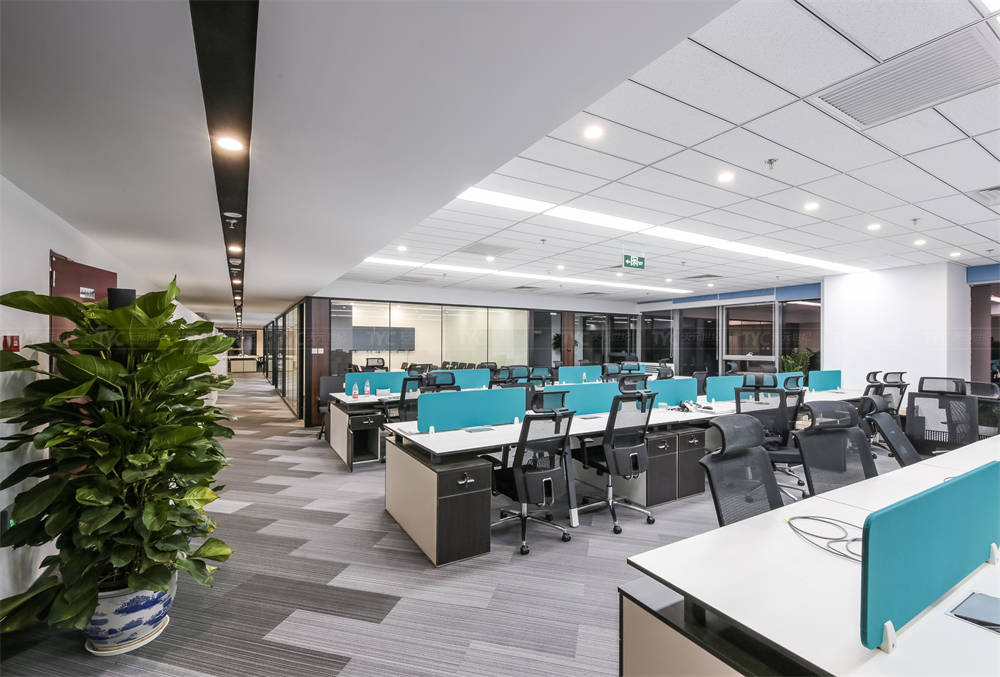
Glare is one of the most common problems in office lighting. Glare refers to discomfort caused by luminaires entering the field of view directly or reflecting on computer screens – typical signs are seeing dazzling LED chips when looking up, or lamp reflections on the screen.
The professional metric is UGR (Unified Glare Rating). For computer‑based office areas, choose luminaires with UGR < 19. For high‑end offices or design studios requiring exceptional visual comfort, consider UGR ≤ 16. The lower the UGR, the softer the light source, and the less eye strain when looking up.
3. Color temperature – White or warm light?
Color temperature determines the “warmth” or “coolness” of light, measured in Kelvin (K).
-
Below 3000K: Warm yellowish light – suitable for break areas, pantries, creating a relaxing atmosphere.
-
4000K: Neutral white – the safe choice for open offices and meeting rooms, balancing alertness and comfort.
-
Above 6000K: Cool white – increases alertness but may cause tension over long periods; typically used only in high‑concentration local areas.
Therefore, most offices use 4000K/5000K as the default color temperature. If budget allows, consider tunable white solutions (e.g., 3000K‑5000K switching).
4. Color rendering index – True color reproduction
The Color Rendering Index (Ra / CRI) measures how accurately a luminaire reproduces true colors. The minimum for offices is Ra ≥ 80. For design, printing, display or other color‑critical tasks, choose Ra ≥ 90.
High‑CRI luminaires (Ra ≥ 90) reproduce documents, drawings, and skin tones faithfully, effectively reducing visual fatigue over long working hours.
5. System efficacy – Long‑term electricity costs
System efficacy (lm/W) directly affects energy consumption and total cost of ownership. High‑quality LED panel lights and linear lights typically achieve ≥120 lm/W, with some premium products reaching 150‑160 lm/W. Compared to traditional fluorescent lights (about 60‑80 lm/W), this can save over 50% on electricity bills.
Energy saving example: Replace an 80W fluorescent lamp with a 40W high‑efficacy LED (130 lm/W). Saving 40W per lamp. Working 10 hours/day, 22 days/month, 2640 hours/year → annual saving 105.6 kWh. At industrial electricity rate of 0.8 RMB/kWh, each lamp saves about 84.5 RMB per year. For an office with 100 lamps, annual electricity saving is 8,450 RMB.
Part 2 – Zone‑by‑Zone Luminaire Selection
Different areas have different usage scenarios; lighting needs vary greatly. Below we break down three core zones from an engineering perspective.
1. Workstation area – “Ambient + task” combination to avoid screen reflection
Ambient light: Use panel lights or linear lights for uniform illumination. Color temperature 4000K neutral white.
-
Recessed panel lights: Suitable for offices with ceiling height ≥2.8m, spacing 1.2‑1.5m.
-
Surface‑mounted / suspended linear lights: Ideal for open ceilings or industrial style offices. Choose products with UGR < 19 and efficacy ≥120 lm/W.
Task light: For employees who hand‑write or have uneven light from windows/corridors, provide tunable‑color‑temperature (3000K‑5000K) and dimmable LED desk lamps.

2. Meeting room – “Main + accent” combination for discussion and presentations
Main light: Use dimmable pendant lights or track‑mounted linear lights. Choose luminaires supporting 0‑10V or DALI dimming to switch between discussion mode (500 Lux) and projection mode (30% brightness).
Accent light: Install wall washers (10‑15W, 4000K) near whiteboards or display walls, aiming 30°‑45° onto the wall to avoid direct eye exposure and keep writing clearly visible.
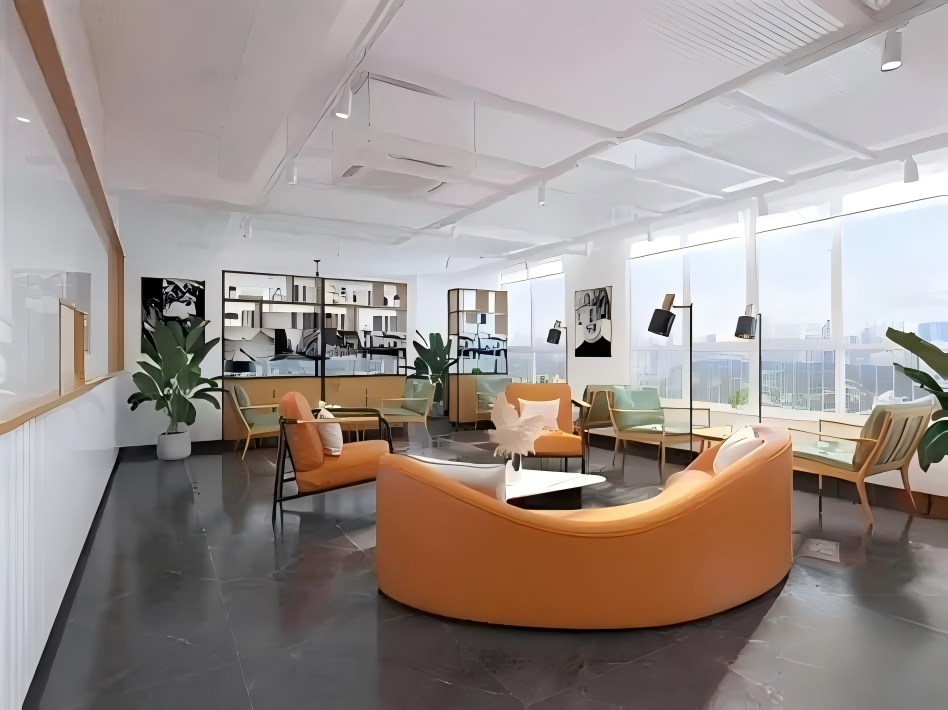
3. Break area (pantry / lounge) – Warm light for relaxation
Main light: Choose 3000K‑3500K warm white ceiling or pendant lights, illumination 150‑200 Lux, and use dimming to lower brightness.
Accent light: Install 12V low‑voltage LED strips (warm white) under counters or cabinets; place a floor lamp with diffuser next to sofas to create a cozy layered atmosphere.
Part 3 – Recommended Office Luminaire Types
For office project procurement, the three luminaire types below have been proven in many projects – durable and professional. Shenzhen Lumin Lighting Co., Ltd offers mature solutions in these categories.
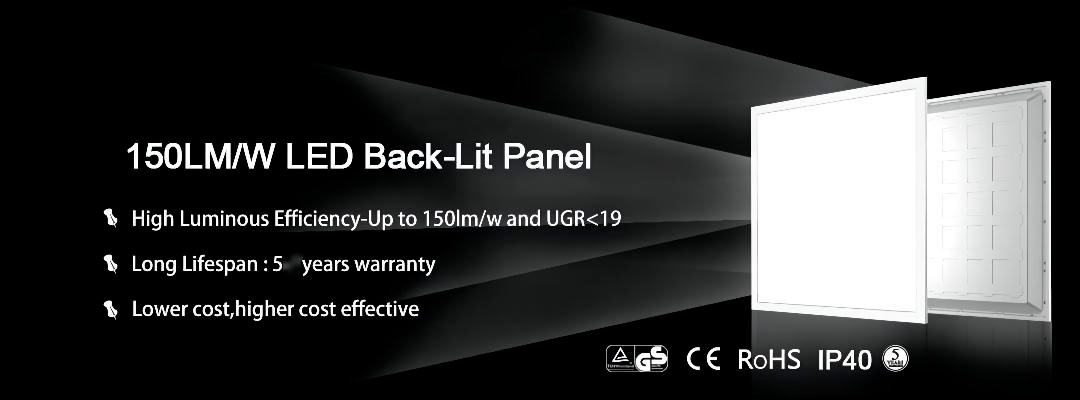
1. LED Panel Light (40w 150lm/w recommended)
-
Advantages: Recessed, space‑saving, uniform light (120° beam angle), lifetime 5‑8 years.
-
Applications: Workstation areas, corridors, pantries – as ambient lighting.
-
Selection tips: Must have anti‑glare treatment (opal or micro‑prismatic diffuser), CRI ≥90.
-
Lumin recommended product: High‑efficacy LED panel light with system efficacy 150 lm/W, significantly reducing long‑term electricity costs. Available in 4000K neutral white, UGR < 19, Ra ≥80 (customizable to Ra ≥90), standard recessed mounting, compatible with most office suspended ceilings.
-
2. LED Linear Light
-
Advantages: Easy surface / suspension mounting, suitable for open ceilings or industrial style offices. Concentrated light (optional beam angles), minimalist design, can be seamlessly spliced into continuous lines.
-
Applications: Open workstations, meeting room main lights, continuous light band design.
-
Lumin recommended product: UltLine X2 Series Linear Lights.
-
Efficacy: 100‑130 lm/W (depending on configuration)
-
Glare: UGR < 19 (UGR < 14 with certain optical kits)
-
CRI: ≥80 / ≥90 / ≥98 options
-
CCT: 3000K / 4000K / 5000K / 6500K
-
Mounting: surface, suspended, recessed, wall, track
-
Features: magnetic seamless splicing, PIR sensor, DALI / 1‑10V / Triac dimming, emergency backup
-
Certifications: CE, RoHS, ENEC
-
Warranty: 5 years limited
-
-
3. Track Lighting System
-
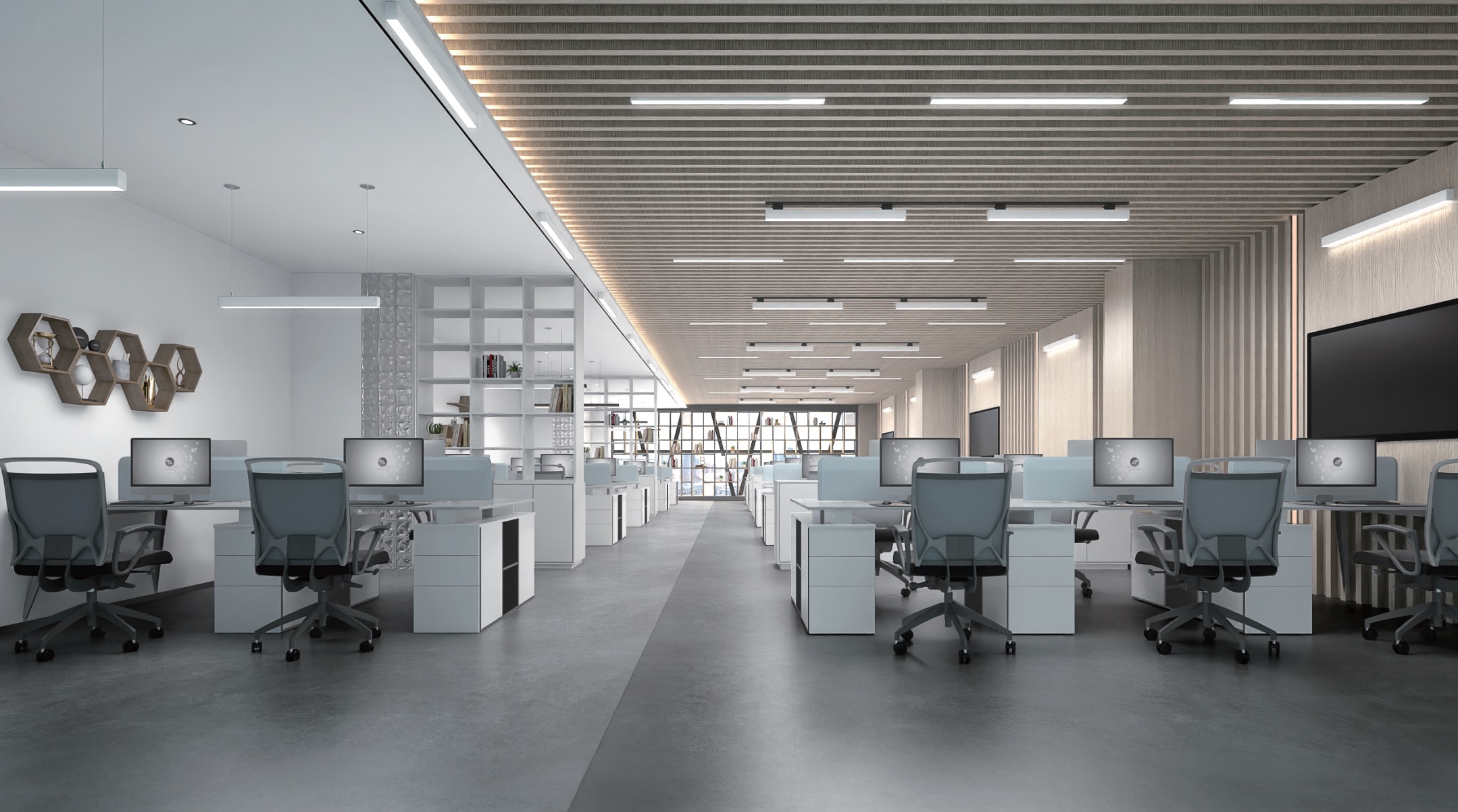
Advantages: Luminaires can slide on the track and rotate 360°, adjustable lighting position, multi‑circuit independent control for easy grouping.
-
Applications: Meeting rooms, display areas, executive offices – accent lighting.
-
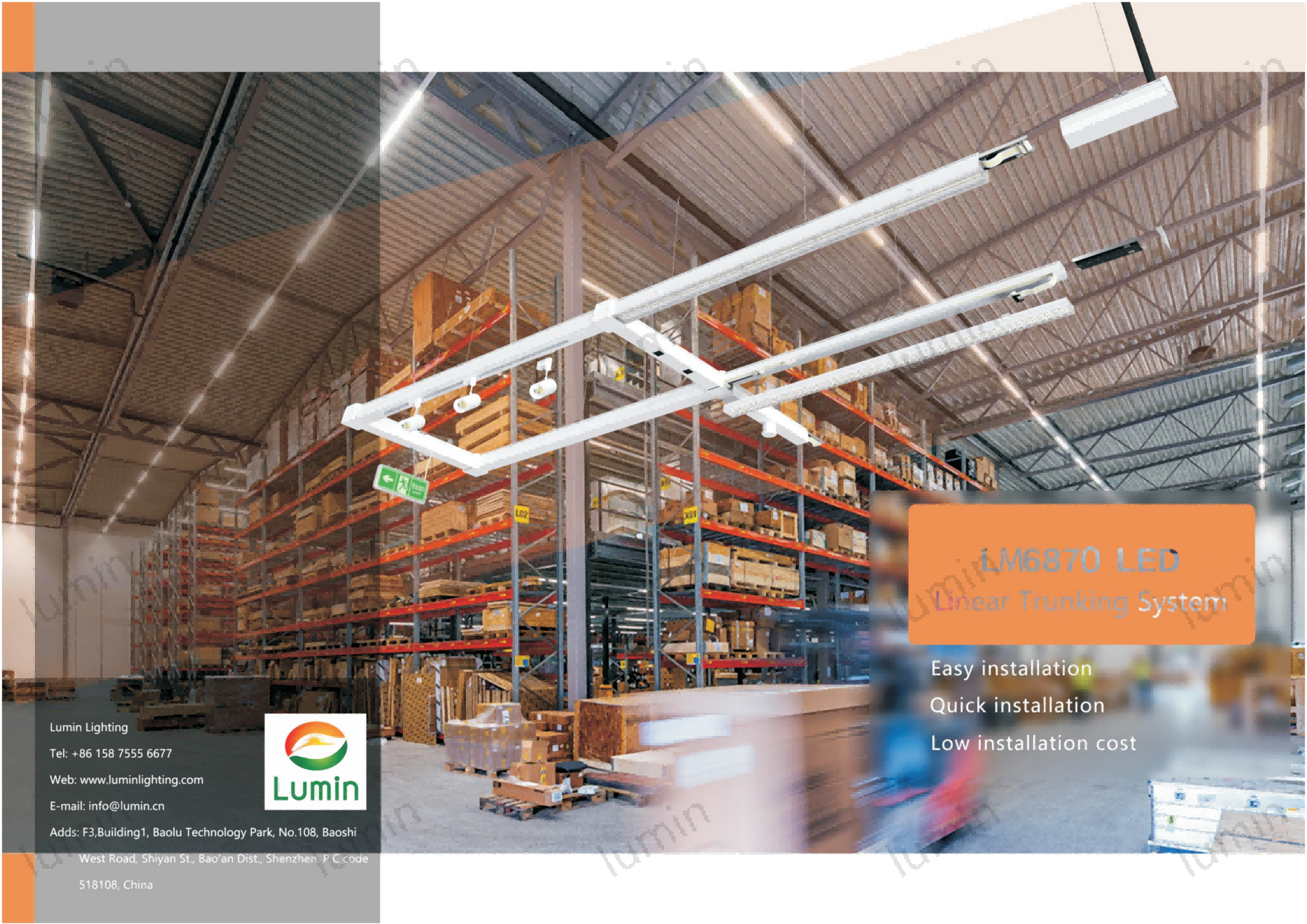
Lumin recommended product: Lumin X1 6870 Linear Trunking System.
-
Track pre‑wired with 3 / 5 / 7 / 8 / 12 circuits, supports 3‑circuit independent switching, 0‑10V / DALI dimming
-
Track conductor: 2.5mm² solid copper wire, max current 12A, single circuit max load 2640W@220‑240V, max continuous length 89m
-
Track lengths: 0.6m / 1.2m / 1.5m
-
Matching LED linear light efficacy up to 160 lm/W, power 26‑75W, CRI >80
-
Options: emergency battery, microwave sensor, daylight sensor
-
Mounting: surface with chains or cables, X/L/T type connectors for layout flexibility
-
-
Part 4 – Common Office Lighting Mistakes (5 Pitfalls)
-
Same light everywhere – break area lacks relaxation, meeting room cannot adapt to projections → use zoning, different CCTs, and dimming.
-
Ignoring glare – luminaires mounted too low or without anti‑glare treatment → choose UGR < 19 luminaires.
-
Buying cheap, poor‑quality luminaires – low Ra, flicker, short lifetime → higher long‑term cost; prefer reputable brands with 5‑year warranty.
-
No dimming function – meeting rooms cannot adapt to different scenarios → use DALI / 0‑10V dimmable drivers.
-
Poor switching layout – inconvenient switch positions, no zonal control → do lighting circuit design before construction, e.g., one switch per 4‑6 workstations, separate window and interior zones.
Part 5 – Procurement Checklist (Generic, No Brand Specific)
| Check Item | Recommended Value / Requirement | Notes |
|---|---|---|
| Luminaire type | Panel light, linear light, track system | Choose by zone |
| System efficacy | ≥120 lm/W (recommend ≥130) | Higher efficacy = lower long‑term electricity cost |
| Color temperature | Office 4000K, break area 3000K | Tunable white is a plus |
| Glare rating | UGR < 19 (UGR ≤16 for premium spaces) | Request test report from supplier |
| Color rendering index | Ra ≥ 80 (Ra ≥ 90 for design areas) | High CRI improves visual comfort |
| Control method | Zoned switching, DALI / 0‑10V dimming, sensor control | At least zoned control + basic dimming |
| Mounting type | Recessed / surface / suspended / track | Based on ceiling structure and design |
| Certifications | CE, RoHS, ENEC (or local market requirements) | Basic requirement for tenders |
| Warranty | ≥5 years | Standard commitment of quality manufacturers |
| Delivery documents | IES/LDT photometric files, manual, certificate | For simulation and on‑site acceptance |
Conclusion
Good office lighting is an “invisible booster” for productivity. From illuminance, glare, color temperature to CRI and system efficacy, every parameter deserves careful consideration from procurement professionals. LED panel lights, linear lights, and track systems each have their best application scenarios. Choosing a manufacturer that offers high efficacy, low glare, long lifetime, and full certifications will significantly reduce long‑term operating costs of your project.
Shenzhen Lumin Lighting Co., Ltd has been深耕 the lighting industry for over 15 years, focusing on R&D and manufacturing to solve project‑based lighting needs. We provide full‑process support from selection consulting, IES files, to custom production.
If you are looking for a reliable LED luminaire supplier for your office project, or a project engineering solution provider, please contact us for selection advice and sample testing.