Tunable White vs. True Circadian Lighting: What Engineers Need to Specify
Introduction: The Multi-Million Dollar Industry Lie
If you ask a supplier during procurement, "Is this fixture a circadian light?"
The answer you will likely get is: "Yes, we support 3000K to 6500K Tunable White."
Sorry, that is a massive red flag.
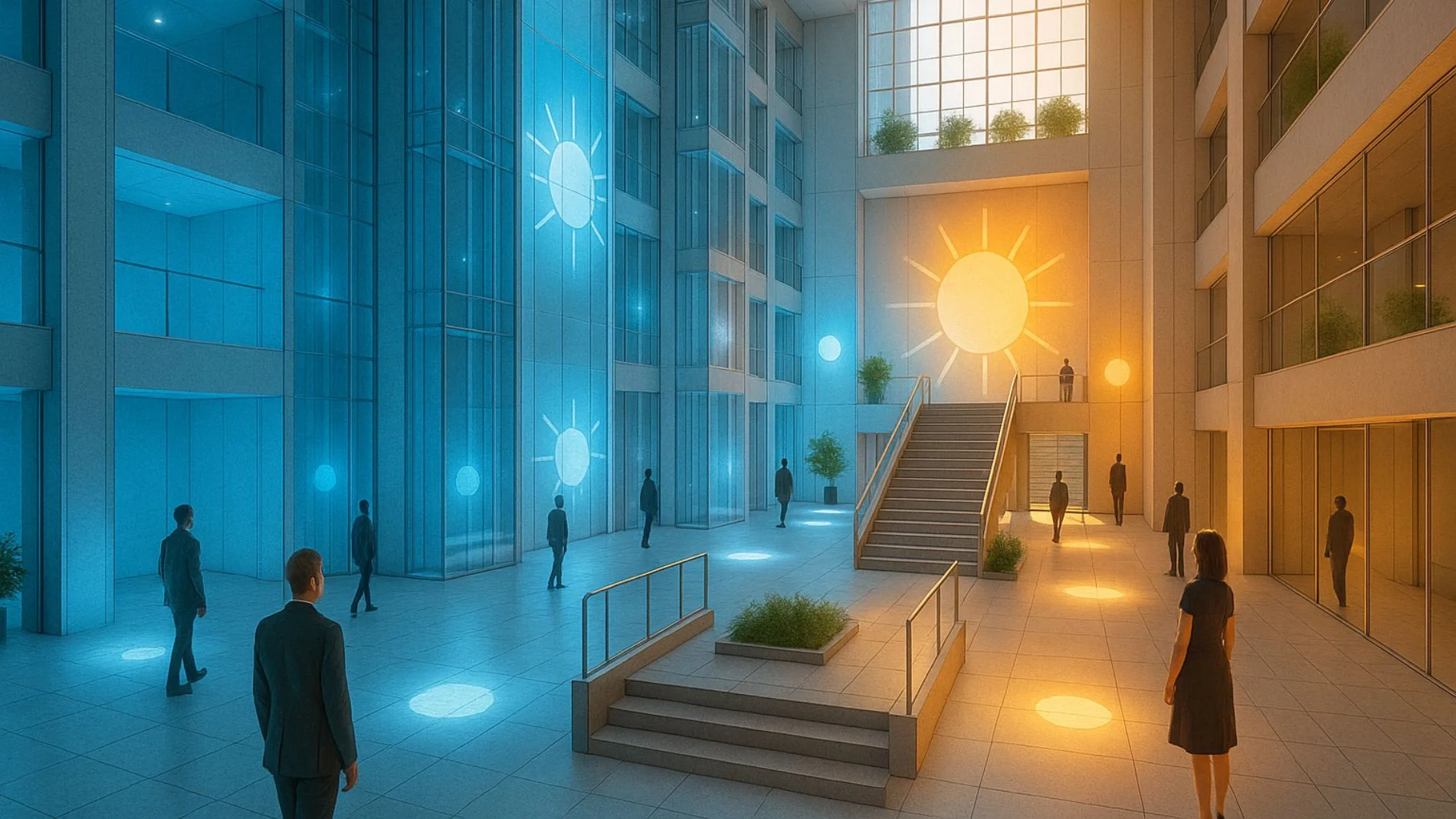
Tunable White can change the color of the light to make a room feel warmer or cooler. But that does NOT equal true circadian lighting.
True circadian lighting isn't about what color the light looks like to the human eye. It’s about how much biological stimulus (melanopic dose) the light delivers to the body clock. Today, we break down the difference between these two across three dimensions: hardware, metrics, and control logic—to help you avoid getting scammed during procurement.
If you are still unclear on the foundational definitions of circadian lighting, we recommend reading our core guide first: 👉 What Is Circadian Lighting and How Does It Support Human Circadian Rhythm?
Part 1: What is Tunable White?
Tunable White (sometimes called CCT Tuning) is the most basic color-changing function.
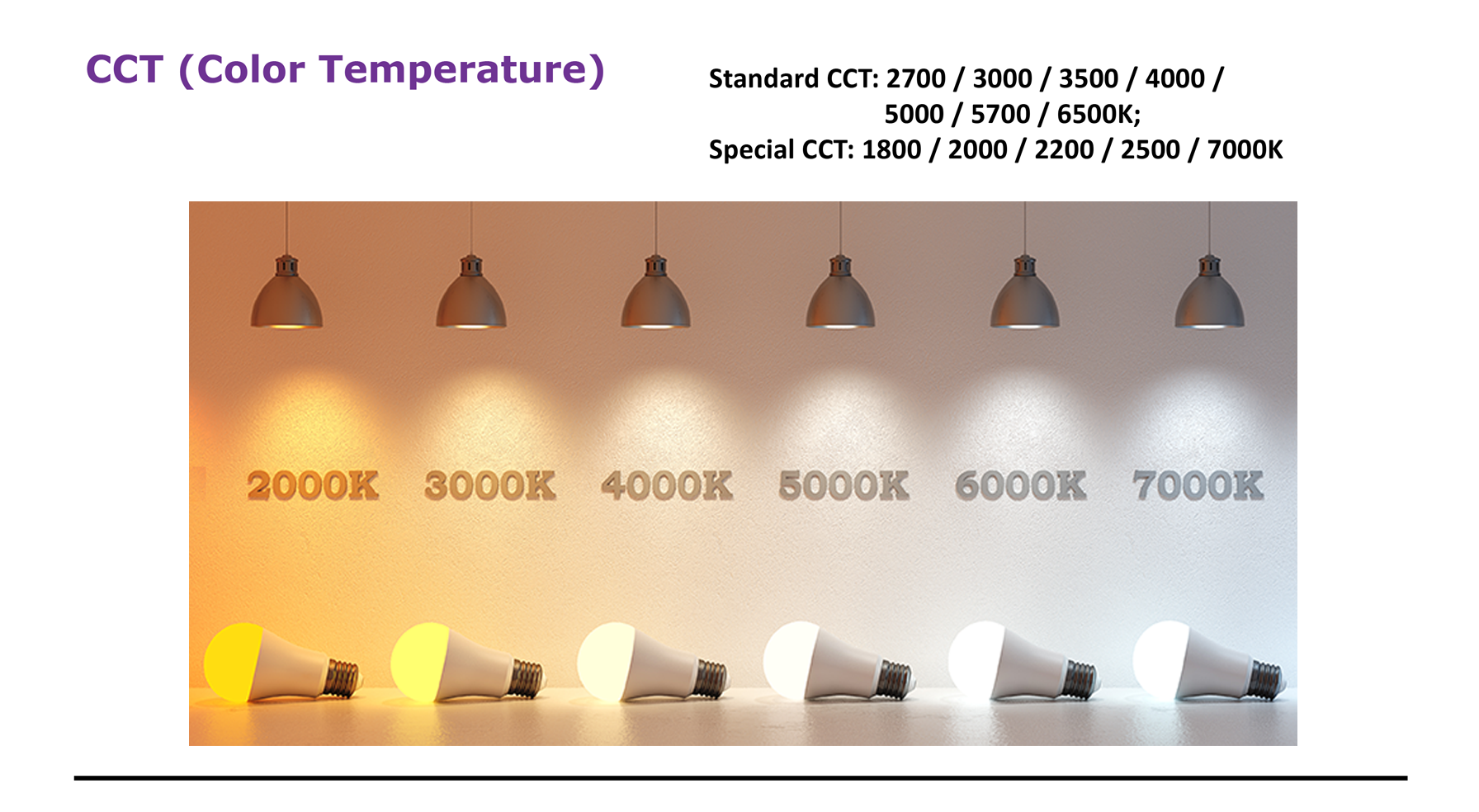
The principle is simple: the fixture houses both cool white LED chips (e.g., 6500K) and warm white LED chips (e.g., 2700K). By changing the output ratio of these two chips, you can achieve any intermediate color temperature like 3000K, 4000K, or 5000K.
Its essence is a "visual feature." It solves design problems (e.g., wanting crisp white light in the morning and cozy warm light in the evening).
Its limitation: It only adjusts the Color Temperature (CCT) number. It does not actually alter the spectral energy distribution around 480nm (the melanopic sensitive band).
Part 2: What is True Circadian Lighting?
True Circadian Lighting is a "chronobiological intervention."
It doesn't just require changing colors; it requires precisely regulating Melanopic Equivalent Daylight Illuminance (M-EDI) at different times of the day.
-
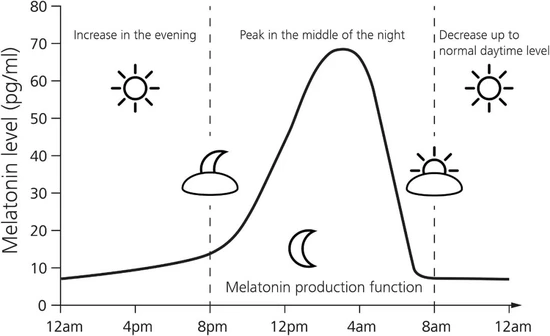
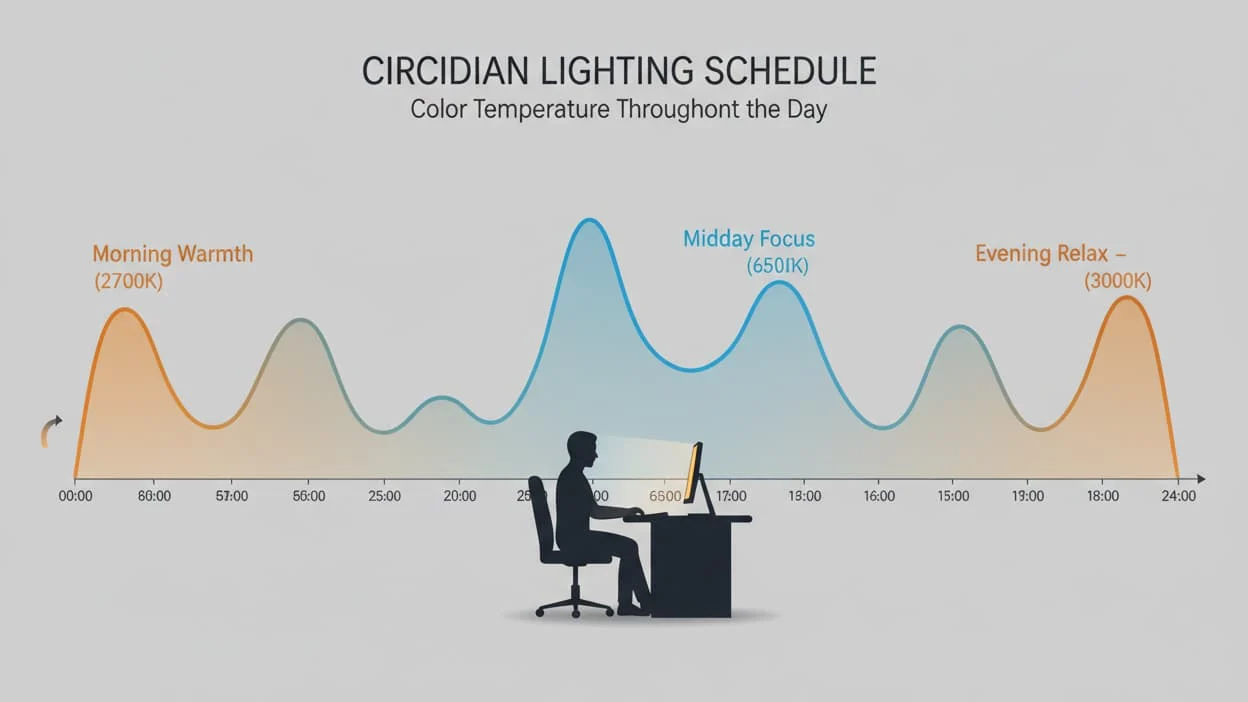
Morning: Deliver high M-EDI to suppress melatonin and promote wakefulness.
-
Evening: Not only must the CCT drop, but the blue peak must be reduced at the spectral level to bring M-EDI below 10 lx, promoting melatonin secretion.
Its essence is a "biological feature." It solves health problems.
Part 3: The Core Differences (Procurement Checklist)
To make your procurement process crystal clear, here is the comparison:
| Dimension | Tunable White | True Circadian Lighting |
|---|---|---|
| Core Goal | Visual comfort, atmosphere creation | Regulate body clock, improve sleep & alertness |
| Key Metric | Color Temperature (CCT) | Melanopic EDI (M-EDI) |
| Spectrum Req. | Mixing cool/warm chips to hit target CCT | Precise spectral design targeting the 480nm blue band |
| Control Protocol | Usually simple 0-10V or remote control | Must have advanced addressing (e.g., DALI-2 / DALI DT8) for time scheduling |
| Hardware Cost | Lower | Higher (Requires custom spectrum & advanced drivers) |
Part 4: Why a "High-CRI Panel" is Not a Circadian Light
There is an even more hidden trick in the industry: selling a high-CRI (e.g., CRI 97) full-spectrum panel and claiming it's a circadian light.
Why is this wrong?
CRI measures the ability to render object colors (vision). Circadian lighting measures the stimulation of ipRGCs (biology).
A static high-CRI panel might look great during the day. But at night, if its blue peak remains high, it will severely disrupt sleep.
True circadian lighting must be dynamic, capable of shifting its spectrum over time. A static high-CRI panel is just a "good light," not a "circadian light."
Want to know how to use scientific metrics to verify a supplier's data? Read our hardcore science guide: 👉 How Melanopic Light Works: M-EDI Metric Explained
Part 5: How to Specify True Circadian Lighting in Your Project
If you want to implement true circadian lighting in commercial projects (like hospitals or offices), add these three requirements to your Bill of Materials (BOM):
-
Demand M-EDI or mDER Data: A true circadian supplier must be able to calculate their melanopic potency at 2700K and 6500K, not just provide CRI.
-
Confirm the Control Protocol: The fixture must support DALI DT8 (for CCT tuning) or DALI-2 (for scene and time scheduling). Standard 0-10V is difficult to use for precise time-dimension control.
-
Verify the Nighttime Spectrum: Demand an SPD graph proving that in "night mode," the blue energy around 480nm is actually reduced—not just that the CCT was set to 2700K.
Part 6: How Lumin Delivers True Circadian Control
As a source factory in Shenzhen, Lumin doesn't just do basic Tunable White; we possess the hardware capability for true dynamic circadian control.
If you only need visual dimming:
Lumin's Tunable White Panels support 2000K-6500K CCT adjustment, meeting daily scene-switching needs with simple controls.
If you need true circadian scheduling:
Lumin's DALI DT8 Smart Panels, paired with high-precision drivers, can integrate with Building Management Systems (BMS). Based on a time program, they automatically switch to high M-EDI mode in the morning and smoothly transition to low M-EDI in the evening.
If you need ultimate nighttime safety:
Lumin's A60 Blue-Free Sleep Bulb uses a special phosphor formulation to cut the blue peak at the spectral level. In 2700K mode, CRI remains ≥98, balancing visual warmth with biological safety.
Tell us your space type and certification goals, and we will provide the corresponding spectral data and control protocol recommendations. 👉 Contact Lumin Technical Team for Project Support
Conclusion: Don't Pay for "Fake Circadian" Lighting
"Tunable White" is a great invention; it gives spaces emotion.
But if you are paying a premium for employee health, patient recovery, or WELL certification points, you must distinguish between "a visual magic trick" and "a biological intervention."
True circadian lighting is not just about changing CCT. It is the perfect combination of spectral engineering, driver protocols, and time programming.
Ready to specify true circadian lighting for your next project? 👉 Download Lumin Product Catalog or contact our sales team directly.
FAQ
No. Tunable White only changes CCT; it does not change the biologically effective spectrum around 480nm. True circadian lighting requires controlling melanopic stimulation at the spectral level and shifting it dynamically on a time schedule.
Q2: What is the difference between DALI DT8 and standard DALI?
DALI DT8 is specifically an extension for "multi-channel color control" (like Tunable White or RGBW). Only drivers supporting DT8 can precisely control cool and warm channels independently, enabling true circadian curve scheduling.
Q3: My project only needs standard lighting, no circadian needs. Is Tunable White enough?
Yes. If your project does not involve WELL certification and doesn't aim to use light for sleep or alertness improvement, a cost-effective standard Tunable White panel is sufficient.
Q4: Do Lumin products have M-EDI certification?
Lumin's product designs follow the design logic of CIE S 026 for melanopic equivalent illuminance (e.g., nighttime spectrum control of the blue-free bulb, spectral completeness of the full-spectrum panel). We can provide spectral design documentation for reference, but specific M-EDI certification must be confirmed with third-party institutions based on your project requirements.
Q5: How can I tell if a supplier's fixture truly supports circadian control?
Ask for the Spectral Power Distribution (SPD) graph and how the energy around 480nm changes in their designated night mode. Also, confirm if their drivers support DALI-2 / DALI DT8.
How Does Light Actually Control Your Circadian Rhythm? The Science Explained