
Human-Centric Lighting vs Circadian Lighting: What's the Difference?
The Two Terms That Get Confused Every Day
Walk into any lighting specification meeting in 2026, and you'll hear two terms used almost interchangeably: human-centric lighting and circadian lighting.
They sound similar. They both involve tunable white light. They both promise better health outcomes. So are they the same thing?
The short answer is no — and the distinction matters more than most people realise. Getting it wrong can lead to lighting designs that either over-claim on health benefits or under-deliver on visual comfort. This article clarifies the difference, explains the science behind both concepts, and shows how three very different Lumin products — a sleep bulb, a full-spectrum panel, and a high-CRI linear light — each serve a distinct purpose within the broader human-centric lighting framework.
According to the Society of Light and Lighting (SLL) in its 2026 position statement, the terms "circadian lighting," "human-centric lighting," and "biodynamic lighting" have been used interchangeably in the industry but are not formally adopted by the International Commission on Illumination (CIE) . The CIE's official term is integrative lighting — lighting that integrates both visual and non-visual effects to deliver physiological and psychological benefits to humans.
That definition is a useful starting point. But it doesn't fully explain the relationship between the two terms that designers and buyers actually use. Let's unpack it.
Circadian Lighting: A Precise, Biological Definition
Circadian lighting is lighting designed to act directly on the circadian system — the body's internal 24-hour clock that governs sleep/wake cycles, hormone secretion, and alertness. For a deeper dive into the fundamentals — including how melanopic light is measured and why it matters for building occupants — see our guide: What Is Circadian Lighting and How Does It Support Human Circadian Rhythm?
The science behind it is well established. In 2002, researchers discovered a fifth class of photoreceptor in the eye — intrinsically photosensitive retinal ganglion cells (ipRGCs) — that are particularly sensitive to short-wavelength blue light and send signals directly to the brain's suprachiasmatic nucleus (SCN), the master circadian clock. This discovery revealed that light does far more than enable vision: it regulates melatonin suppression, cortisol release, heart rate, and even mood.
Circadian lighting works by modulating light exposure across the day to support this system:
-
Morning: high melanopic content (blue-rich, high colour temperature) to promote alertness and circadian entrainment.
-
Daytime: sustained high melanopic exposure to maintain focus and regulate the sleep-wake cycle.
-
Evening and night: low melanopic content (warm, low colour temperature) to avoid suppressing melatonin and to prepare the body for sleep.
The scientific consensus, summarised by Brown et al. (2022) and adopted by the SLL, recommends ≥250 lx melanopic EDI during the day, <10 lx in the evening, and <1 lx at night for healthy day-active adults. The WELL Building Standard similarly uses Equivalent Melanopic Lux (EML) as a compliance metric, with thresholds for daytime and evening exposure.
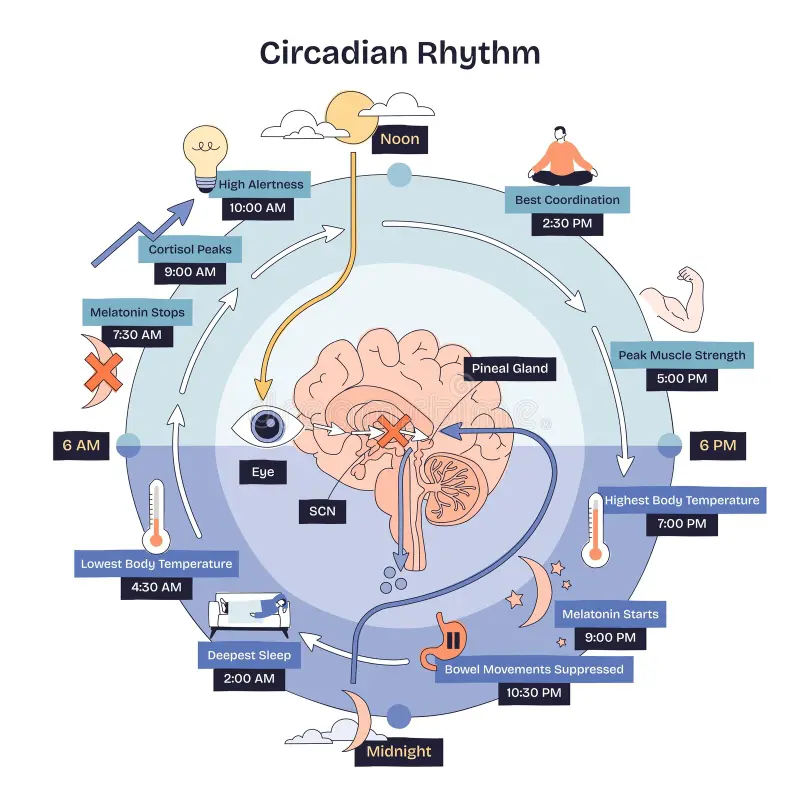
In short: circadian lighting is a specific, measurable intervention targeting one biological system — the circadian clock.
Human-Centric Lighting: A Broader, More Holistic Framework
Human-centric lighting (HCL) is a broader concept. It includes circadian support, but it is not limited to it.
As Helvar puts it: "Human-centric lighting, while it includes circadian support, goes beyond by also considering the emotional and visual comfort of occupants. It encompasses a more holistic approach to wellbeing, addressing not only sleep–wake cycles, but also mood, performance, and the overall experience of a space."
Or, as the lighting industry often summarises the relationship: all circadian lighting is human-centric, but not all human-centric lighting is circadian.
A useful analogy: circadian lighting is one pillar of a house. Human-centric lighting is the whole house. The house needs that pillar — but it also needs walls, a roof, windows, and a functioning door.
In practical terms, HCL covers three overlapping dimensions. Many people conflate these dimensions or focus on only one and then claim to be "human-centric lighting." Let's unpack each one.
Have a project in mind? Not sure whether you need circadian lighting or a broader human-centric lighting specification? Contact us for project-specific selection advice →
Dimension 1: Visual Comfort — The Most Fundamental Layer, and the Most Easily Skipped
This is the foundation of human-centric lighting. Without visual comfort, every other health claim is built on sand.
Visual comfort isn't about whether light "looks nice" — it's about whether light allows the eye to work over extended periods without strain, effort, or harm. It involves four measurable core metrics:
1. Glare Control (UGR)
Glare is the discomfort produced when brightness in the visual field exceeds what the eye has adapted to. It doesn't have to be bright enough to make you squint — it can quietly accumulate over hours into eye fatigue, headaches, and reduced concentration.
The Unified Glare Rating (UGR) is the international metric for glare. According to European standard EN 12464-1, the recommended limit for office tasks is UGR ≤ 19; precision work and drawing rooms require stricter UGR ≤ 16. Spaces with UGR above 22 almost inevitably produce visual fatigue during extended work.
This is why low glare isn't a "bonus feature" — it's the entry threshold for human-centric lighting.
2. Flicker (SVM and Percent Flicker)
Flicker is the rapid fluctuation of light output over time. The eye may not "see" flicker, but the nervous system perceives it. Typical symptoms of prolonged exposure include eye fatigue, headaches, and reduced attention; in severe cases, it can trigger photosensitive epilepsy.
The two primary metrics are Percent Flicker and Stroboscopic Effect Visibility Measure (SVM) . The EU's 2026 Ecodesign regulation requires SVM ≤ 0.4 for most light sources (industrial applications may be exempted up to 0.9). Truly human-friendly lighting should achieve zero visible flicker, not just "compliance."
3. Colour Rendering (CRI and TM-30)
The Colour Rendering Index (CRI) measures how accurately a light source renders object colours, with a perfect score of 100. The baseline for general commercial lighting is CRI ≥ 80, but human-centric lighting typically requires CRI ≥ 90, and healthcare, retail, and gallery settings require CRI ≥ 95.
A more advanced metric is TM-30, which uses Rf (fidelity) and Rg (gamut) to describe spectral quality more comprehensively. A panel with high CRI but deficient red content can make skin tones look grey and food look unappetising — that is also a visual comfort problem.
4. Illuminance and Uniformity
Insufficient task illuminance forces the eye to over-accommodate; uneven illuminance forces the gaze to switch repeatedly between bright and dark areas — both accelerate visual fatigue. EN 12464-1 provides explicit illuminance recommendations for offices, classrooms, hospitals, and other settings. Human-centric lighting should build on these baselines while also considering uniformity (typically ≥0.6) and vertical illuminance (which affects facial recognition and spatial perception).
The core logic of the visual comfort dimension: if a light tires the eye, it cannot be "healthy," no matter how closely its spectrum resembles sunlight.
Dimension 2: Circadian and Biological Support — The Pillar That Actually Acts on the Biological Clock
This is the core of circadian lighting and the most "hard science" layer of human-centric lighting.
Visual comfort addresses "whether the eye is comfortable"; circadian support addresses how light affects the body's internal clock. The two are mediated by different photosensory systems: vision relies primarily on cones and rods, while circadian regulation relies primarily on ipRGCs (intrinsically photosensitive retinal ganglion cells).
The key to the circadian dimension is not "whether the light looks warm or cool," but the intensity of stimulation the light delivers to the melanopic system at a given time. This is why melanopic EDI (Equivalent Daylight Illuminance) has become the core metric — it converts any light source into "how many lux of daylight would produce an equivalent ipRGC stimulus."
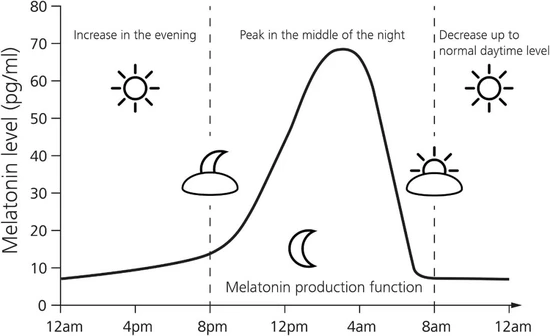
A complete circadian support strategy needs to manage three things simultaneously:
1. Daytime Melanopic Dose
Daytime requires sufficient melanopic stimulation to "anchor" the circadian clock, maintain alertness, and stabilise mood. The SLL recommends melanopic EDI ≥250 lx during the day for healthy adults. Typical consequences of insufficient dose include daytime grogginess, difficulty falling asleep at night, and overall circadian phase drift.
2. The Evening and Nighttime Melanopic "Cliff"
From evening onward, melanopic exposure should drop sharply (SLL recommends <10 lx), and further to <1 lx at night. This cannot be achieved by simply "dimming a bit" — if a warm-white light still has a high blue component, melanopic stimulation may exceed the threshold even if it looks "warm." Effective nighttime solutions require spectral-level reduction of the blue peak.
3. Dynamic Change Across Time
Circadian support is not "pick a colour temperature and install it." It requires rhythmic variation across the day: high in the morning, stable during the day, declining in the evening, low at night. A static high-CRI panel, no matter how good its spectrum, lacks this temporal dimension and therefore cannot be called circadian lighting.
The core logic of the circadian dimension: light appearing at the right time matters more than whether the light itself is "good."
Dimension 3: Emotional and Psychological Wellbeing — How Light Makes a Space "Feel Right"
This is the most subjective layer of human-centric lighting and the one most easily overlooked in engineering specifications. Yet it is precisely what users actually experience every day.
Visual comfort answers "are my eyes tired?" Circadian support answers "is my biological clock accurate?" The emotional dimension answers: how does this space make me feel? Do I want to stay here?
It involves several interrelated aspects:
1. Light Distribution and Directionality
At the same illuminance, direct downlighting and indirect wall-washing produce completely different psychological responses. Indirect lighting and wall-washing soften spatial boundaries and reduce shadow-induced oppression, making people feel more relaxed; large-area direct downlighting provides functional illuminance but can also create an "office-like" and tense atmosphere. Human-centric lighting needs to select light distribution based on spatial function, not just pile on illuminance.
2. Dynamism and Connection to Nature
The eye and brain have a natural preference for "change." A static light environment makes a space feel rigid and lifeless; slow changes in colour temperature and brightness — even small in magnitude — make a space feel "alive" and establish a psychological connection to outdoor day-night cycles. This is also the expression of biophilic design in lighting.
3. Personalisation and Sense of Control
Research shows that the sense of control over the lighting environment itself increases satisfaction — even if the user ultimately selects the same settings as the default. Dimmable, tunable-white, zone-controllable systems allow people to adjust light to their task, mood, and preference. This sense of "I'm in charge" is an important component of emotional wellbeing.
4. Colour and Emotional Association
Colour temperature, colour rendering, and the materials in a space work together to influence emotional arousal. Warm, low-illuminance settings tend to relax; cool, high-illuminance settings tend to alert; and high colour rendering allows colours in the space to appear true, avoiding a "grey and dull" oppressive feel. The emotional dimension requires lighting design to work in concert with interior materials and colour schemes, rather than selecting a luminaire in isolation.
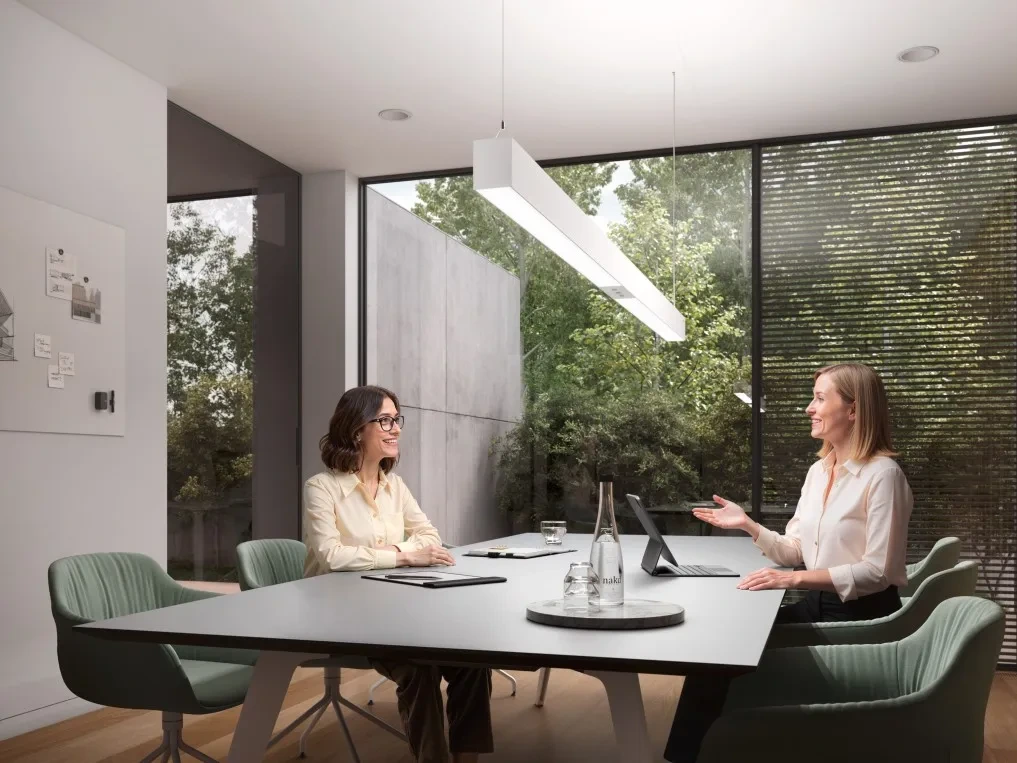
The core logic of the emotional dimension: people are not sensors, and spatial experience cannot be fully described by a handful of parameters.
The Relationship Between the Three Dimensions
These three dimensions are not a checklist of parallel items — they are layered, mutually reinforcing:
-
Without visual comfort, circadian support is meaningless — a light that tires the eye, even with a perfect melanopic dose, is not healthy lighting.
-
Without circadian support, human-centric lighting is just "comfortable ordinary lighting" — no matter how good the visual comfort and emotional experience, if the biological clock is completely ignored, the most health-valuable layer of human-centric lighting is missing.
-
Without the emotional dimension, human-centric lighting becomes cold technical metrics — parameters all met but the space makes people not want to stay is equally not genuine human-centric design.
A practical way to evaluate is: ask three questions, and see how many the product/solution can pass.
| Question | What It Tests | Relevant Metrics |
|---|---|---|
| Is the light visually comfortable? | Glare, flicker, colour rendering, illuminance | UGR, SVM, CRI, illuminance uniformity |
| Does it support the circadian system? | Melanopic content and timing across the day | Melanopic EDI / EML, dynamic scheduling |
| Does the space feel right? | Emotional and psychological response | Light distribution, dynamism, sense of control, colour coordination |
Passing only the first question is basic lighting. Passing the second is circadian lighting. Passing all three is genuinely human-centric lighting.
The SLL's 2026 position statement is clear on this point: practitioners should "distinguish clearly between established principles, emerging evidence and open research questions" and "avoid over-claiming." Calling a static high-CRI panel "circadian lighting" is an over-claim. Calling it "human-centric" is defensible — provided the visual comfort dimension is genuinely addressed.
Need to confirm lighting metrics for a specific project? We can help you check UGR, CRI, M-EDI and other key parameters against your space type, certification targets and budget. Contact us for detailed technical advice →
How the Three Lumin Products Fit
The distinction between the three dimensions becomes concrete when you look at how different products serve different layers of the HCL framework.
1. Sleep Bulb: The Circadian Pillar, Distilled
Lumin's A60 10W blue-light-free sleep bulb is a focused circadian intervention. It uses special phosphor formulations to reduce the blue light peak while maintaining CRI ≥ 98Ra, directly addressing the melatonin-suppression problem that disrupts sleep.
Key specifications:
-
Blue-light-free spectral design (special phosphor formulation, not a filter).
-
4-step switch-controlled dimming and tunable white — no app, no gateway, no remote.
-
CRI ≥ 98 in 2700K mode, with R9 (red rendition) at 92 and R15 (skin tone) at 98.
-
Memory function: remembers the last mode after 5 seconds of power-off.
This is circadian lighting at the product level — a bulb designed specifically to support the evening and nighttime phase of the circadian cycle by removing the blue light that suppresses melatonin. It is not trying to be a full HCL system. It is doing one thing well: protecting sleep.

2. PROSUN Full-Spectrum Panel: Visual Comfort Meets Biological Support
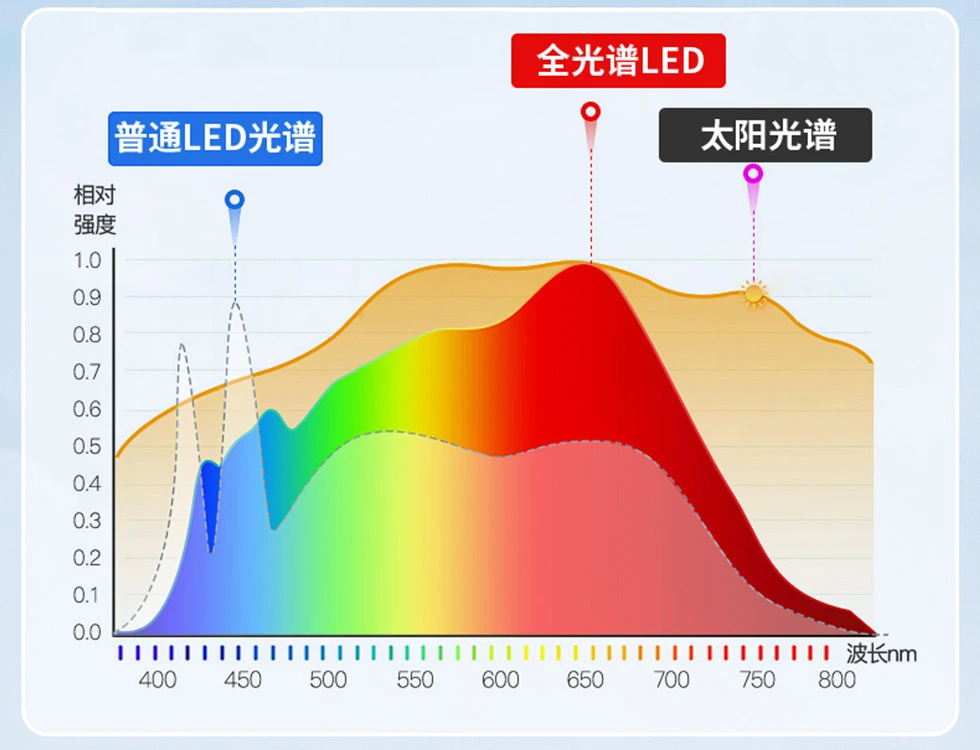
The PROSUN 45W 595×595 panel (LM-PL-66-45) sits at the intersection of visual comfort and circadian support. It delivers a sun-like full spectrum with CRI 97, SDCM <3, and an enriched red-light component that rebalances the output relative to conventional LEDs.
Key specifications:
-
CRI Ra 97, 5000K daylight-white CCT.
-
Enriched red light — "cares for eyes, skin, and bones," reducing blue light hazard while promoting visual comfort.
-
4250 lm, >95 lm/W, UGR <19.
-
50,000-hour design lifetime (L80B20).
The PROSUN panel is human-centric lighting in the visual-comfort dimension. It is not a dynamic circadian system — it does not automatically shift CCT across the day. But it delivers the kind of high-quality, full-spectrum, low-hazard light that forms the foundation of any HCL specification. In an office, school, or clinic, this is the light that makes the space visually comfortable and biologically supportive at the same time.

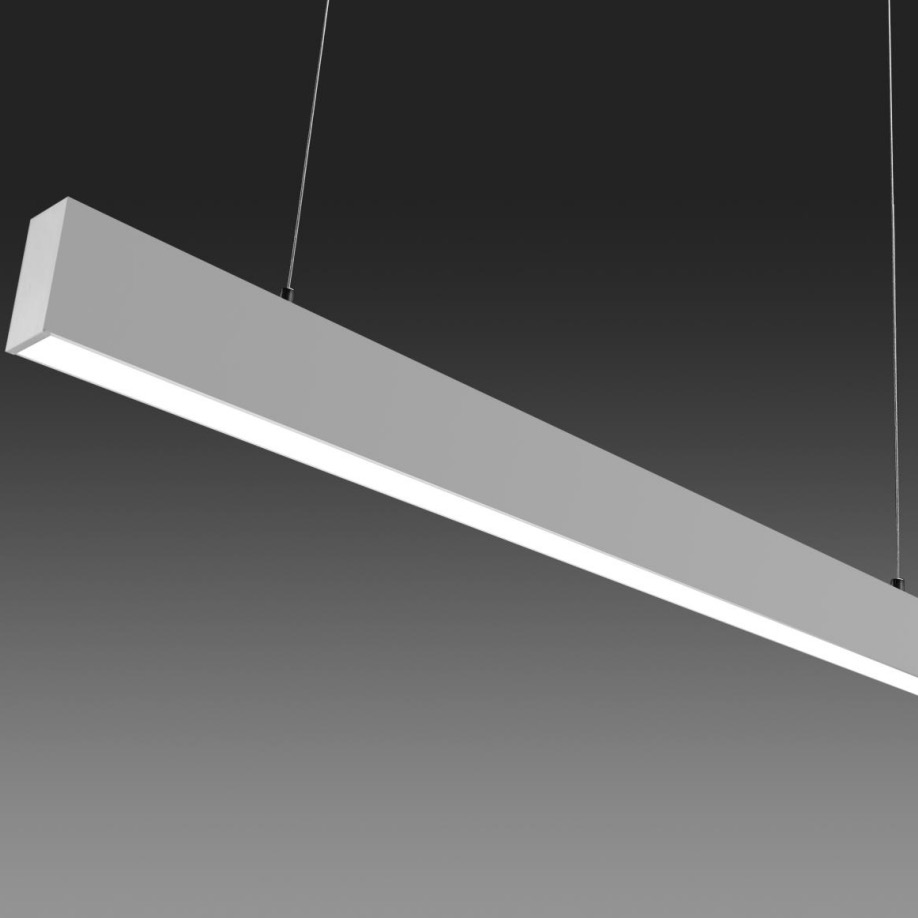
3. UltLine X2 Linear Light: HCL Through Glare Control and Flicker Elimination
The UltLine X2 7550 linear light takes a different route to human-centric lighting. Its contribution is primarily in the visual comfort layer — but that contribution is substantial.
Key specifications:
-
UGR19 low glare, zero flicker, CRI98 (maintaining CRI 97 even after secondary optics).
-
Up to 130 lm/W efficacy.
-
Direct/indirect illumination with 30% upward / 70% downward distribution, supporting circadian rhythm regulation through balanced vertical and horizontal illuminance.
-
DALI, 1-10V, Triac, and wireless control options.
The UltLine X2 is not marketed as a "circadian light" in the narrow sense — it does not have an automatic melanopic EDI schedule built in. But it is profoundly human-centric because it eliminates the two most common sources of visual discomfort in commercial spaces: glare and flicker. A space with UGR19 and zero flicker is a space where people can work for hours without eye strain. That is a health outcome, even if it is not a circadian one.
A Practical Framework for Specifiers
When specifying lighting for a project, the distinction between the three dimensions should guide what you ask for and how you evaluate claims.
| Question | What It Tests | Relevant Metric |
|---|---|---|
| Is the light visually comfortable? | Glare, flicker, colour rendering, illuminance | UGR, SVM, CRI, illuminance uniformity |
| Does it support the circadian system? | Melanopic content across the day | Melanopic EDI / EML, dynamic scheduling |
| Does it feel right in the space? | Emotional and psychological response | Light distribution, dynamism, sense of control, colour coordination |
A product that passes only the first question is basic lighting. A product that passes the second is circadian lighting. A product or system that addresses all three is genuinely human-centric.
The SLL's 2026 position statement is clear on this point: practitioners should "distinguish clearly between established principles, emerging evidence and open research questions" and "avoid over-claiming." Calling a static high-CRI panel "circadian lighting" is an over-claim. Calling it "human-centric" is defensible — provided the visual comfort dimension is genuinely addressed.
Conclusion: One Framework, Different Tools
Human-centric lighting and circadian lighting are not competing ideas. They operate at different levels of abstraction.
-
Circadian lighting is a targeted biological intervention. It asks: does this light support or disrupt the body's internal clock?
-
Human-centric lighting is a broader design philosophy. It asks: does this light support human health, comfort, and performance in every dimension — visual, biological, and emotional?
The most effective lighting specifications use all three lenses. They specify circadian metrics (melanopic EDI, EML) where biological outcomes matter, they apply visual comfort criteria (glare, CRI, flicker) to ensure the space is genuinely comfortable, and they consider the emotional dimension (distribution, dynamism, control) to ensure the space feels right.
Lumin's product range reflects this layered approach. The sleep bulb addresses the circadian pillar directly. The PROSUN panel delivers full-spectrum visual comfort with biological support. The UltLine X2 eliminates the visual stressors that undermine any health claim. Together, they cover the spectrum from targeted circadian intervention to holistic human-centric design.
Ready to specify lighting that supports visual comfort, circadian health, and emotional wellbeing? Contact Lumin for a project consultation →
FAQ
Q1: Is circadian lighting always human-centric?
Yes. Circadian lighting, by definition, supports human biological health, so it falls under the human-centric umbrella. As the industry consensus puts it: all circadian lighting is human-centric, but not all human-centric lighting is circadian.
Q2: Can a product be human-centric without being circadian?
Absolutely. A fixture with very low glare (UGR19), zero flicker, and high colour rendering (CRI98) is human-centric because it reduces visual fatigue and supports visual performance — even if it has no automatic circadian scheduling. Visual comfort is a core dimension of human-centric lighting.
Q3: What is melanopic EDI, and why does it matter?
Melanopic Equivalent Daylight Illuminance (melanopic EDI) is a metric defined in CIE S 026:2018 that quantifies how much a light source stimulates the ipRGCs — the photoreceptors that regulate the circadian clock. It is the most widely adopted metric for specifying circadian-effective lighting. The SLL recommends ≥250 lx melanopic EDI during the day and <10 lx in the evening for healthy adults.
Q4: Does a high-CRI panel automatically qualify as circadian lighting?
No. CRI measures colour rendering — how accurately a light source renders object colours. It says nothing about melanopic content or circadian timing. A high-CRI panel can be excellent for visual comfort while having a fixed, non-dynamic spectrum that does not support the circadian system across the day.
Q5: Which Lumin product should I choose for a circadian-focused project?
For a focused circadian intervention (e.g., a bedroom or a sleep-sensitive environment), the blue-free sleep bulb is the most targeted option. For a broader human-centric specification in a commercial space, combine the PROSUN full-spectrum panel (visual comfort + biological support) with UltLine X2 (glare and flicker control) and use a DALI or wireless control system to schedule CCT changes across the day.
What is Circadian Lighting and How Does It Support Human Circadian Rhythm?
