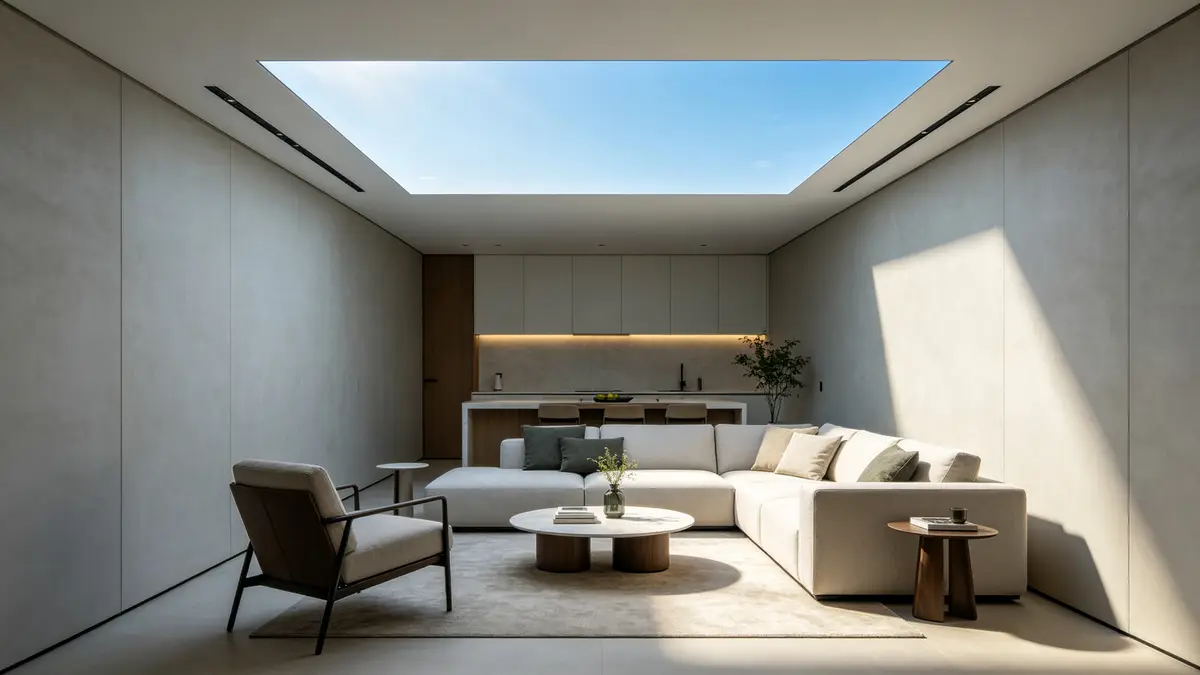
Artificial Skylight vs Traditional Skylight: Which One Is Right for Your Project? A Complete Comparison Guide

In architecture and interior design, natural light has always been one of the most valuable resources. It influences the atmosphere of a space, the mood of its occupants, and even health and productivity.
When a building can't provide enough windows or daylighting surfaces, skylights become a classic solution. But today, designers, contractors, and property owners have more than just one option – artificial skylights are gaining increasing attention.
So the question is: artificial skylight vs traditional skylight – which one should you choose?
1. Traditional Skylights: The Classic Daylighting Solution
A traditional skylight is an opening cut into a building's roof, fitted with glass or transparent panels to allow direct sunlight into the interior. It's one of the oldest and most direct daylighting methods.

1. Real Natural Light – Traditional skylights bring in actual sunlight – full spectrum, with color temperature that naturally changes with the time of day and weather. This is something no artificial light source can 100% replicate. Studies show that natural light can reduce daytime lighting energy consumption by up to 80%, significantly lowering building operating costs.
2. Architectural Value – A well-designed skylight can become a building's signature feature, enhancing spatial quality and property value. It creates a visual connection between indoors and outdoors, allowing occupants to experience the changing sky, clouds, and light.
3. Ventilation – Some operable skylights also provide natural ventilation, improving indoor air quality.
Limitations of Traditional Skylights
1. Structural Constraints – Traditional skylights must be installed on the roof and require structural modifications – cutting through the roof, reinforcing the frame, and waterproofing. This means they cannot be used in basements, interior rooms, or lower floors of multi-story buildings that lack roof access.
2. Leakage Risk – Skylight leaks are one of the most common issues. Poor installation, aging seals, and damaged flashing can all lead to leaks, resulting in costly repairs and mold problems. Even with quality installation, roof renovations or seismic activity can compromise the waterproofing layer.

3. Heat Loss and Heat Gain – Glass conducts heat far more effectively than insulation materials. In summer, large glass surfaces can cause overheating; in winter, heat escapes through the skylight. Research indicates that skylights generally have much lower thermal performance than standard windows – energy codes typically allow significantly higher U‑values for skylights than for windows.
4. High Installation Costs – Traditional skylight installation involves roof work, structural reinforcement, waterproofing, insulation, and permitting – the total cost is far higher than the surface price suggests. According to market data, installing a traditional skylight typically costs between $1,000 and $2,800.

5. Uncontrollable Lighting Environment – Traditional skylights depend entirely on weather, season, and time of day. No light on cloudy days, too much light on sunny days, too dark in the evening – and you can't adjust any of it.
2. Artificial Skylights: Sunlight Recreated Through Technology
An artificial skylight is a lighting system that uses LED technology and optical principles to simulate natural daylight. It doesn't require cutting a hole in the roof – instead, it's installed within the ceiling, using Rayleigh scattering technology to recreate the effect of a blue sky and sunlight.
Advantages of Artificial Skylights
1. No Structural Modifications – Artificial skylights are installed within the ceiling – no roof cutting, no structural reinforcement, no waterproofing. This means they can be installed on any floor, in any room – basements, interior offices, hallways, dark bathrooms – as long as there's a ceiling.
2. Zero Leakage Risk – As fully enclosed electrical fixtures, there's no possibility of “leaking from outside.” There's also no need for regular exterior glass cleaning or seal inspections.
3. Fully Controllable Lighting Environment – Artificial skylights allow precise adjustment of brightness and color temperature, with 0‑100% stepless dimming. Whether it's cloudy outside or the middle of the night, the indoor lighting environment remains consistently “daylight.”
4. Circadian Lighting and Health Benefits – Lumin artificial skylights support Rhythm Lighting functionality – the light automatically tracks the time of day, shifting from warm morning light to cool midday white to cozy evening tones. Studies have shown that artificial skylights outperform traditional fluorescent lighting in maintaining daytime work performance, with less psychological and physiological stress【29†L31-L32】. In windowless environments, artificial skylights can also effectively reduce tension, anxiety, and claustrophobia.
5. Flexible Installation and Low Maintenance – Artificial skylight installation doesn't require roof work – shorter construction time and less disruption. As sealed systems, they require almost no maintenance. LED light sources have a lifespan of 30,000‑50,000 hours.
Considerations for Artificial Skylights
1. Higher Initial Investment – High‑quality artificial skylights (especially those with Rayleigh scattering and smart control features) may cost more upfront than basic traditional skylights. However, long‑term savings in energy and maintenance costs can offset this difference.
2. Not “Real Sunlight” – Artificial skylights simulate the spectrum and visual effects of daylight, but they aren't real sunlight – no UV, no infrared heat. For some, this may be a drawback; for others (such as spaces needing to protect furniture, artwork, or avoid overheating), it's actually an advantage.
3. Application Scenarios: Who Is Each Better Suited For?
Traditional skylights are better for:
-
Single‑family homes and villas – top‑floor spaces
-
Scenarios with a strong need for a “real sky view” (e.g., living rooms, attics)
-
New construction projects where skylight positions can be planned at the design stage
-
Projects with sufficient budget and time for roof modifications
Artificial skylights are better for:
-
Basements, dark bathrooms, dark kitchens – spaces with no roof access at all
-
Interior office areas, windowless offices – improving employee morale and productivity
-
Hospitals and care facilities – creating a calming environment for patients
-
Commercial spaces and showrooms – needing stable, controllable “daylight” display environments
-
Lower floors of multi‑story buildings – where traditional skylights can't be installed
-
Renovation projects – scenarios where you don't want to touch the roof structure


4. Comprehensive Comparison: See the Differences at a Glance
| Aspect | Traditional Skylight | Artificial Skylight (Lumin) |
|---|---|---|
| Installation location | Roof only | Any room with a ceiling |
| Structural modification | Requires roof cutting, reinforcement, waterproofing | No structural modification needed |
| Leakage risk | Yes (seal aging, waterproofing damage) | Zero (fully enclosed electrical fixture) |
| Thermal impact | Summer heat gain, winter heat loss | No impact on indoor temperature |
| Lighting control | Uncontrollable (depends on weather and time) | Fully controllable (brightness, CCT adjustable) |
| Smart control | Not supported | Supports DALI/Zigbee/Tuya/Wi‑Fi/Bluetooth |
| Circadian lighting | Not supported | Supported (auto‑follows time of day) |
| Maintenance needs | Regular cleaning, seal inspections | Almost maintenance‑free |
| Installation cost | $1,000‑$2,800+ | Moderate (subject to quote) |
| Applicable floors | Top floor only | All floors |
5. Conclusion: Not Replacement – Optimal Solution
Artificial skylights and traditional skylights are not replacements for each other – they are optimal solutions for different scenarios.
Traditional skylights are about borrowing daylight – bringing sunlight from above the roof into the interior. They're suited for spaces with roof access, sufficient budget, and a desire for a genuine daylight experience.
Artificial skylights are about creating daylight – recreating blue sky and sunlight indoors through technology. They're suited for spaces without roof access, projects needing stable and controllable lighting, and applications pursuing health‑focused lighting value.
The choice isn't about “which is better” – it's about “which is better for your project.”
Lumin's artificial skylight range – from the Ultra‑Thin Series to the Sun‑Type Series, and Wallwasher Series – covers a wide spectrum of applications, from residential to commercial, from dark bathrooms to showrooms. Every product is built on Rayleigh scattering technology, bringing the spectrum, dynamics, and rhythm of natural light into indoor spaces.
Want to learn more about the technical details of Lumin artificial skylights and project case studies? Download the full Lumin skylight product catalog or contact our professional team for customized solutions.

📍 Address: F3, Building 1, Baolu Technology Park, Shiyan Street, Bao‘an District, Shenzhen, Guangdong, China
📧 Email: info@luminlighting.com
📱 Phone: +86 15875556677
Can an Artificial Skylight Improve Your Sleep and Mental Health? – The Science Behind Circadian Lighting
5 Windowless Spaces That Desperately Need an Artificial Skylight – From Basements to Offices, Bring Sunlight Indoors