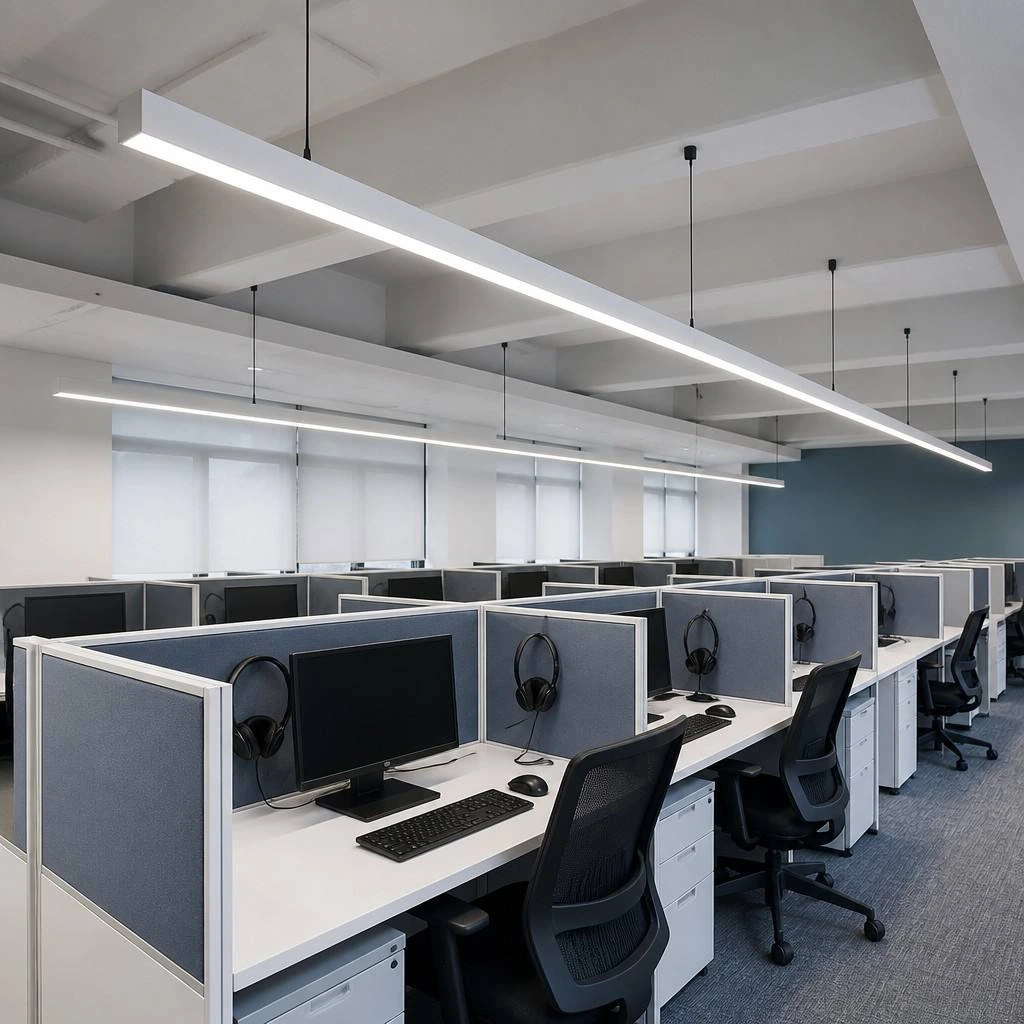
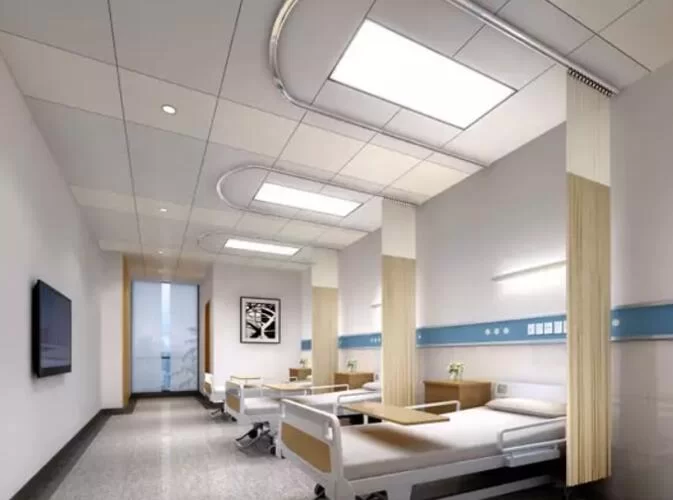
Circadian Lighting for Hospitals : Accelerating Recovery and Reducing Staff Fatigue
Introduction: The "Invisible Pollution" in Healthcare Spaces
Modern medicine is waking up to a critical fact: Lighting is not just for seeing medical equipment; it is a fundamental biological signal.
Traditional static lighting in healthcare spaces creates massive "light pollution." It disrupts patients' circadian rhythms, delays recovery, and leaves the medical staff—who work grueling shifts—chronically fatigued. Today, we explore how circadian lighting for hospitals is transforming healthcare environments, and how to specify the right medical LED panel lights to meet WELL building standards.
💡 New to Circadian Lighting?
If you want to understand the foundational science of how light regulates the human biological clock, start with our core guide:
👉 What Is Circadian Lighting and How Does It Support Human Circadian Rhythm?
Part 1: Why Healthcare Urgently Needs Circadian Lighting
In a hospital, circadian lighting is not just a "nice-to-have" feature; it directly affects clinical outcomes and staff performance.
1. For Patients: Accelerating Recovery & Improving Sleep
Research shows that prolonged exposure to poor lighting and lack of natural daylight can lead to depression, sleep disorders, and even postoperative delirium.
-
Daytime: High illuminance and high melanopic EDI (M-EDI) cool white light suppress melatonin, boost mood, and support therapy.
-
Nighttime: Extremely low M-EDI warm light protects the natural secretion of melatonin. A 16-week randomized cross-over trial cited in our science breakdown found that an Enhanced Circadian Lighting System (CILS) increased deep sleep duration from 81 to 128 minutes and reduced nighttime awakenings.
💡 Want to see the clinical data?
Read our deep-dive science article on how light signals the brain and impacts sleep:
👉 How Does Light Actually Control Your Circadian Rhythm? The Science Explained
2. For Medical Staff: Maintaining Alertness & Reducing Errors
Nurses and doctors work in high-stress, windowless environments. High melanopic stimulation during the day helps them stay sharp during rounds and surgeries, while an ultra-low blue light environment in the break room ensures their short naps are actually restorative.
3. Meeting WELL Building Standards
Whether it's a new private hospital or a high-end nursing home, WELL v2 (Feature L03) has strict requirements for circadian lighting in healthcare spaces. Using true circadian hardware is a prerequisite for certification.
Part 2: Specialized Lighting Requirements in Medical Spaces
A hospital is not a standard office. Different areas demand highly specific optical and safety features:
-
Patient Rooms: High visual comfort, zero glare (UGR<19). Must be bright during the day but extremely dim and blue-light-free at night.
-
Examination & Dental Rooms: Demands extreme color accuracy (CRI > 95) and strict hygiene standards to prevent cross-infection.
-
MRI & Imaging Rooms: Fixtures must be completely non-magnetic to prevent image distortion and equipment malfunction.
-
Windowless Waiting Areas: Patients face high anxiety; biophilic design and artificial skylights are needed to provide visual relief and reduce claustrophobia.
Part 3: The Lumin Medical-Grade Hardware Matrix
To meet these stringent medical requirements, Lumin provides specialized, certified lighting solutions:
1. For MRI Rooms & Imaging Suites: Zero Magnetic Interference
Standard LED lights contain iron and magnetic components that can severely distort MRI images.
-
Recommended: Lumin Non-Magnetic 35W 24V MRI Skylight Panel (LM-PL-MRI-SKY)
-
100% Ferromagnetic-Free: Crafted from non-magnetic aluminum alloy (6063), making it absolutely safe for Zone IV (MRI scanner room).
-
Ultra-Slim 8.8mm: Features a 6000K daylight sky effect with CRI>90 to calm patients during scans.
-
Safety Note: Requires an external DC24V driver placed outside the MRI room.
-

2. For Dental Clinics & Examination Rooms: Antibacterial + High CRI
These spaces require continuous microbial control and precise color rendering for accurate diagnosis.
-
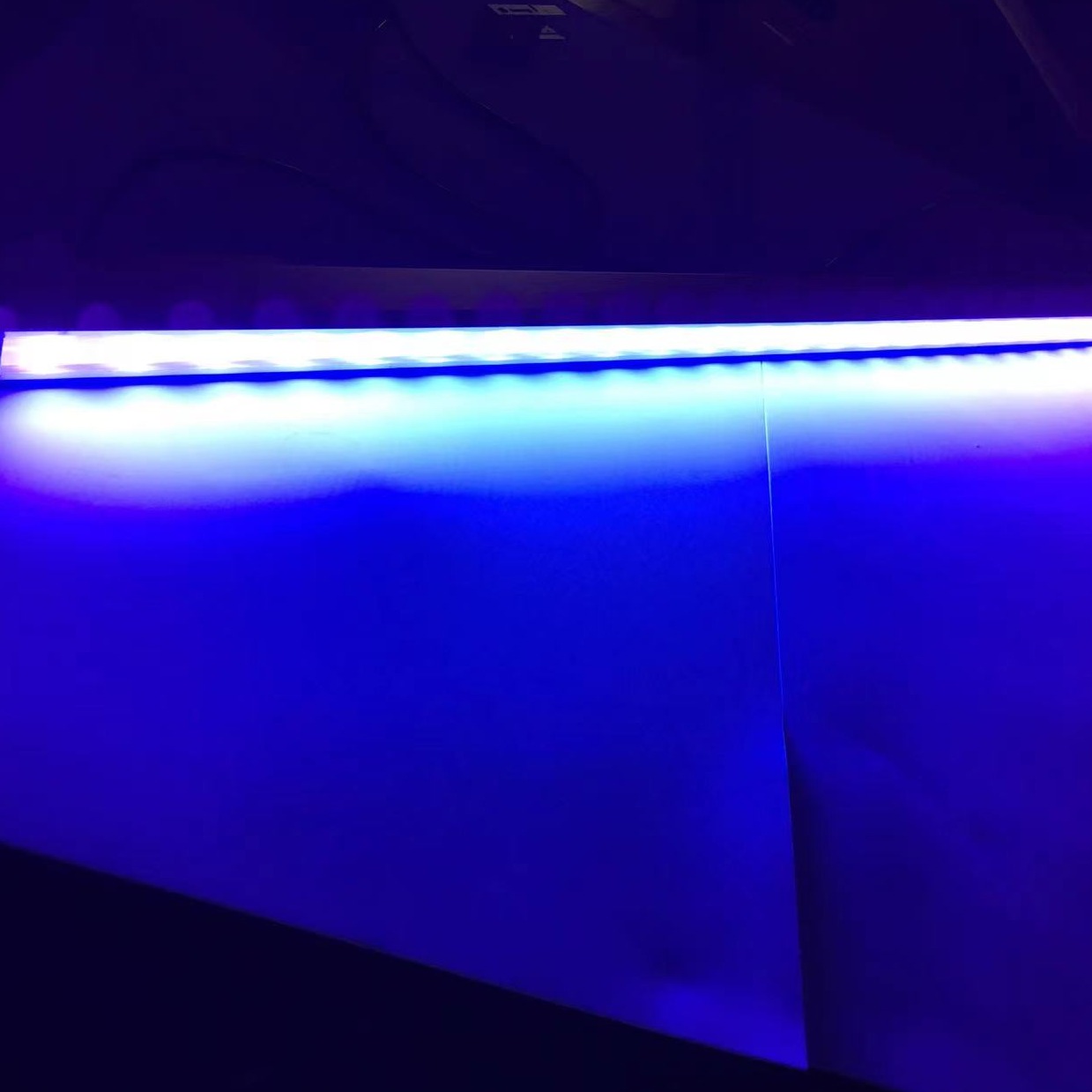
Recommended: Lumin VioClean Antibacterial LED Linear Light (LM-V007)
-
UVA 405nm Antibacterial: Uses non-UVC 405nm near-ultraviolet light to continuously inactivate E. coli and S. aureus safely in occupied spaces.
-
5600K PROSUN Natural Daylight: CRI>98 provides sunlight-like accuracy for medical examinations.
-
IP65 Waterproof: Fully sealed design withstands hospital-grade washdown and meets strict hygiene requirements.
-
3. For Windowless Wards & Waiting Areas: Reducing Patient Anxiety
For medical areas lacking windows, a static ceiling increases patient anxiety.
-
Recommended: Lumin Recessed Virtual Sky Ceiling Light (LM-PL-SKY)
-
Realistic Blue Sky Effect: High-transmittance PMMA light guide plate with printed sky patterns creates depth and calmness.
-
T-bar Grid Compatible: Drop-in design fits standard 2x2 or 2x4 medical ceilings perfectly.
-
Flicker-Free: Protects both patients and long-shift medical staff from eye strain.
-

Part 4: BOM Checklist for Hospital Projects
When writing the specification for a medical project, ensure these criteria are met:
-
Verify M-EDI Data: Demand spectral data proving the daytime M-EDI is ≥250 lx, and the nighttime mode is <10 lx.
-
Control Protocol: Use DALI DT8 or DALI-2 to enable scene switching (e.g., "Examination Mode," "Sleep Mode," "Cleaning Mode").
-
Glare & Flicker: UGR must be ≤19, and SVM must be <0.4.
💡 Don't be fooled by basic Tunable White.
Many suppliers claim their fixtures are circadian just because they change color temperature. Learn how to distinguish true medical-grade circadian lighting:
👉 Tunable White vs. True Circadian Lighting: Key Differences
Conclusion: Light is the "Invisible Medicine" in Healthcare
Choosing circadian lighting for a hospital is not just about meeting building codes; it is a health investment.
From accelerating patient recovery to protecting the sleep of night-shift nurses, Lumin provides a complete medical-grade hardware portfolio ranging from full-spectrum panels to smart linear lights. Let the power of natural light become a warm and steady force in your healthcare space.
Looking for a reliable medical lighting supplier?
👉 Contact Lumin’s Technical Team for Project Support
Or download our full product catalog directly: Download Lumin Product Catalog
FAQ
Q1: Why are normal LED lights unsafe for MRI rooms?
Normal LED lights often contain iron components (in the housing or driver) which are strongly attracted by the MRI's magnetic field. This can lead to projectile hazards or image distortion. Lumin's MRI sky panel uses 100% non-magnetic aluminum and requires the driver to be placed outside the 5 Gauss line.
Q2: Is UVA 405nm antibacterial light safe for occupied hospital rooms?
Yes. Unlike UVC (which is hazardous to human skin and eyes), UVA 405nm is a near-ultraviolet wavelength that is safe for continuous operation in occupied spaces. It works by exciting porphyrins inside bacteria, effectively killing them without evacuating the room.
Q3: Can your virtual sky panels replace real skylights in windowless wards?
While they don't provide the UV or heat of real sunlight, Lumin virtual sky panels provide the visual and psychological benefits of a real sky. They are highly effective at reducing claustrophobia and anxiety in windowless imaging suites, waiting areas, and recovery rooms.
Q4: Won't dimming the lights at night affect nurses' rounds?
No. We recommend using Zone Control. The main lights in the ward are turned off, but very low-level night lights or under-bed lights can be installed. Alternatively, use fixtures that support low-blue-light modes. This meets the visual needs of the nurses while protecting the patient's melatonin secretion.
Q5: Is the Lumin artificial skylight suitable for hospitals?
Absolutely. Lumin's artificial skylights recreate a realistic blue sky and natural sunlight. For windowless wards or waiting areas, it significantly relieves patient anxiety and claustrophobia. They are fully enclosed with flat PMMA panels, making them easy for hospital staff to clean and disinfect.
Q6: Our hospital does not have a DALI system yet. Can we still achieve circadian changes?
Yes. If integrating into a complex BMS is not feasible right now, you can use fixtures equipped with wireless controls (such as Zigbee or Tuya). This allows you to implement basic circadian changes via a mobile app or simple timers.
Circadian Lighting for Office: How to Boost Productivity and Alertness