
Human Centric Lighting: Trend or Gimmick? 2026 Market Data & Science
Introduction: A Question Every Procurement Decision-Maker Must Answer
"Human Centric Lighting" (HCL) is one of the most talked-about concepts in the lighting industry today.
Proponents call it "the future of lighting." Skeptics say it's just "a new way to sell lights." As a procurement decision-maker, your question is practical: Is human centric lighting worth the investment? Is it a scientifically grounded health solution, or just supplier marketing?
This article doesn't repeat the "what is human centric lighting" basics. Instead, we approach it from a procurement decision perspective, using market data, scientific research, and industry standards to answer four core questions:
-
Which direction is the market moving? — What capital and industry giants are doing
-
How solid is the scientific evidence? — A photobiology breakdown
-
How do you distinguish "true circadian lighting" from "fake healthy lighting"? — A procurement checklist
-
Have industry standards been implemented? — Compliance frameworks and certification basis
If you're evaluating lighting solutions for a commercial project, this article provides a clear decision-making framework.
Part 1: Market Data — Capital Is Voting with Its Feet
1.1 The Human Centric Lighting Market: From Billions to Tens of Billions
The most direct way to judge whether a concept is a trend or a gimmick is to look at capital flows. Over the past two years, the human centric lighting market's growth data can only be described as "explosive."
According to a market report published by Global Information (GII), the global human centric lighting market was valued at approximately $3.06 billion in 2024 and is projected to reach $27.05 billion by 2033, with a compound annual growth rate (CAGR) of 27.4% during the forecast period (2026-2033) [1].
Data from The Business Research Company confirms this trend: the human centric lighting market grew from $2.18 billion in 2024 to $2.79 billion in 2025, at a CAGR of 27.7%, and is projected to reach $7.32 billion by 2029 [2].
Data Bridge Market Research offers an equally positive forecast: the market was valued at $4.57 billion in 2025 and is projected to reach **$21.11 billion by 2033, at a CAGR of 21.08% [3].
Fortune Business Insights reports that the global human centric lighting market was valued at $4.2 billion in 2025 and is projected to grow from $5.2 billion in 2026 to $25 billion by 2034, at a CAGR of 21.70% [4].
Multiple authoritative data sources cross-validate: the human centric lighting market is in a high-growth channel, with CAGR steadily between 20% and 27%.
1.2 Circadian Lighting Systems: The Core Segment Is Equally Strong
As the core technology carrier of human centric lighting, the circadian lighting system market data is equally noteworthy.
According to QYResearch, global circadian rhythm lighting system sales reached $5.208 billion in 2025 and are projected to reach $12.72 billion by 2032, at a CAGR of 13.6% (2026-2032) [5].
Global Info Research data shows slight variation but the same trend: the global circadian rhythm lighting system market was valued at $5.359 billion in 2025 and is projected to reach $12.869 billion by 2032, at a CAGR of 13.3% [6].
For B2B procurement decision-makers, the significance of this data is: the market is rapidly maturing, the supply chain is scaling, and product prices are becoming more reasonable.
Want to see how Lumin's healthy lighting product line aligns with this trend? Explore Lumin's Healthy Lighting Solutions →
Part 2: Scientific Evidence — Light as a "Biological Signal"
2.1 How Light Affects the Body's Rhythm
Human centric lighting isn't "feels good" mysticism — it's built on a solid foundation of photobiology.
When light enters the human eye, beyond producing vision, it also sends signals through a specialized neural pathway — the retinohypothalamic tract — to the brain's suprachiasmatic nucleus (SCN) . The SCN is the body's "master clock" for circadian rhythms, regulating melatonin (sleep hormone) and cortisol (wakefulness hormone) secretion, body temperature, heart rate, and a range of other physiological processes.
The Wikipedia entry on the suprachiasmatic nucleus explains this mechanism in detail: the SCN is located in the hypothalamus and is the core region controlling circadian rhythms [7].
According to research by Berson et al. published in Science in 2002, a special class of photosensitive retinal ganglion cells (ipRGCs) directly participates in regulating the biological clock, and they are most sensitive to blue light (approximately 480nm wavelength) [8].
This means: the "color" and "timing" of light affect human physiological states — not just "brightness."
2.2 How Tunable White Simulates Natural Light
The core technology of human centric lighting systems is tunable white LED. By independently controlling warm and cool LED channels, luminaires can simulate the changes of natural light throughout the day:
-
Morning: High color temperature, blue-rich — suppresses melatonin secretion, promotes alertness
-
Daytime: Bright, neutral white — maintains work efficiency
-
Evening: Gradually lower color temperature, shifting to warm yellow — promotes melatonin secretion, prepares the body for sleep
For the physiological effects of color temperature, the Wikipedia entry on color temperature provides a basic reference [9].
2.3 The Core Value of Circadian Lighting
A circadian rhythm lighting system is an intelligent lighting solution that dynamically adjusts light intensity, color temperature, and spectral composition to align the artificial light environment with the human biological clock. Its value is determined not just by lumen output, but by software control logic, sensor integration, and building-level connectivity.
Evaluating circadian lighting solutions for an office or healthcare project? Download Lumin's Healthy Lighting Selection Guide →
Part 3: Procurement Decisions — How to Distinguish "True Circadian" from "Fake Healthy"
3.1 Three Types of "Human Centric Lighting" on the Market
| Type | Characteristics | Procurement Recommendation |
|---|---|---|
| True Circadian Lighting | Scientific spectral recipe, clinical validation data, DALI DT8 dimming, building control system integration | ✅ Recommended |
| Semi-Circadian Lighting | Supports color temperature adjustment, but incomplete spectrum, no circadian algorithm, single control protocol | ⚠️ Evaluate carefully |
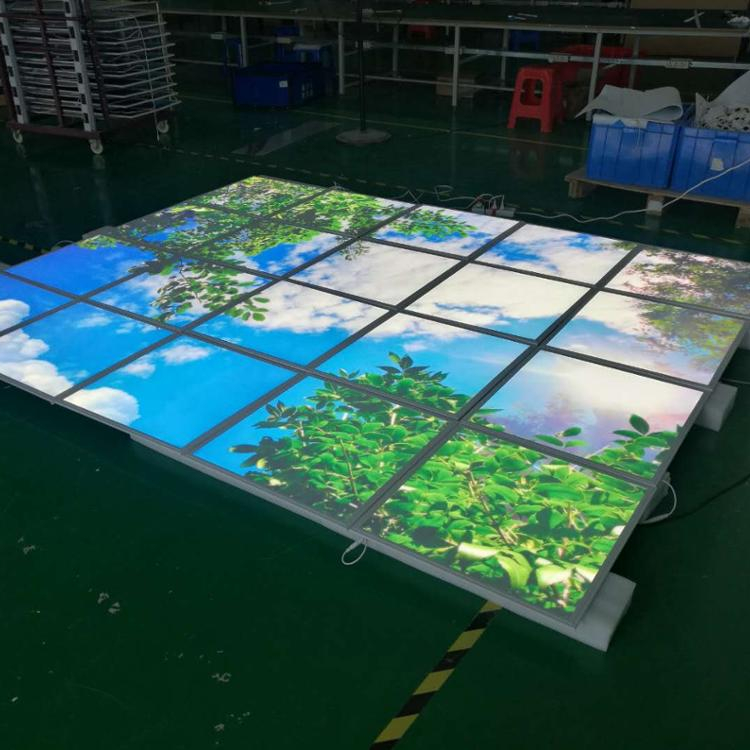
| Fake Healthy Lighting | Uses only blue light source or blue diffuser film to "disguise" sky effect, no spectral design | ❌ Avoid |
3.2 Five Key Checkpoints for Procurement
Checkpoint 1: CRI and Spectral Integrity
True healthy lighting should provide a complete spectrum, not just emphasize a single band. Lumin's healthy lighting products achieve CRI up to 98, approaching natural light color rendering capability.
Checkpoint 2: Control Protocol Compatibility
Circadian lighting needs to integrate with building control systems. Confirm whether the product supports DALI DT8, Zigbee, Tuya, Casambi, Wi-Fi, or Bluetooth.
Checkpoint 3: Third-Party Test Reports
Require suppliers to provide spectral test reports, flicker test reports, and lifespan test reports.
Checkpoint 4: Customization Support
Different projects require different color temperature ranges, power, and sizes. Confirm whether the supplier supports OEM/ODM customization.
Checkpoint 5: Warranty and After-Sales
Human centric lighting is a long-term investment, and warranty terms are critical. Lumin offers a 3/5 years limited warranty covering manufacturing craftsmanship issues.
Internal link: Need a custom healthy lighting solution for your project? Get a Lumin OEM Customization Quote →
Part 4: Industry Standards — From "Wild Growth" to "Regulated"
4.1 China's First Group Standard for "Sky Light" Published
On August 3, 2026, the China Association of Lighting Industry officially released and implemented the group standard "LED Luminaires for Sky-Simulating Light" (T/CALI 0403-2026) [10]. This standard specifies the classification, technical requirements, test methods, and inspection rules for LED luminaires that simulate sky light, defining specifications across safety, optics, electrical performance, and reliability dimensions.
This is the first group standard under the China Association of Lighting Industry specifically targeting "LED sky light" innovative products, marking that the industry is beginning to distinguish between "scientific light recipes" and "gimmick imitations."
4.2 International Standards: CIE S 026 and WELL v2
At the international level, CIE S 026:2018 established the first internationally recognized metric system for the non-visual biological effects of light — defining melanopic equivalent daylight illuminance (m-EDI) [11]. This standard is the basis for WELL v2's EML (Equivalent Melanopic Lux) requirement of 150 (Tier 1) or 275 (Tier 2) .
The Wikipedia entry on the International Commission on Illumination (CIE) provides background information on this organization [12].
Part 5: Strategic Moves by Industry Leaders
Major international lighting companies are accelerating their investments in the human centric lighting space.
June 2024: Signify launched its NatureConnect lighting system, based on biophilic design principles, using energy-efficient LEDs and smart controls to simulate daylight variations throughout the day [13].
January 2025: LEDVANCE acquired German lighting company loblicht, expanding its product lines in the human centric lighting segment [14].
These investments prove: human centric lighting is not a fleeting marketing concept, but a strategic direction with long-term commercial value.
Part 6: Lumin Healthy Lighting — Bringing Human Centric Lighting to Life
Theory needs products to carry it. Lumin's healthy lighting product line translates human centric lighting principles into verifiable solutions.
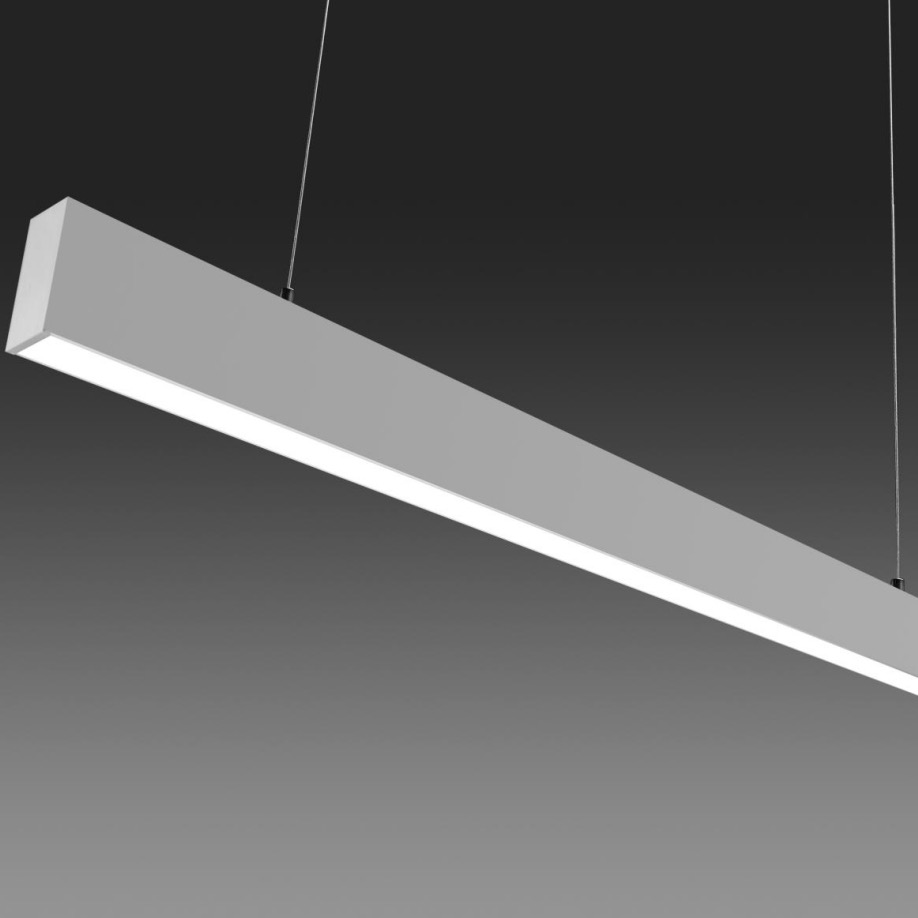
Pro-sun Linear Light - UltLine X2 7550 is one of the flagship products in Lumin's healthy lighting series.
7550X Core Healthy Lighting Features:
-
Sun-like spectrum: Spectral distribution close to natural light
-
Tunable white technology: Supports full-range color temperature adjustment
-
Low glare design: UGR values as low as 14
-
High color rendering index: CRI up to 98
-
Smart control: Supports DALI dimming, compatible with circadian rhythm lighting control systems
The tangible value of Lumin healthy lighting:
-
More efficient work environments: Simulating natural light changes helps employees maintain daytime alertness
-
Healthier employees: Improving sleep quality and reducing health risks
-
Lower operating costs: Intelligent adjustment of brightness and color temperature — more energy-efficient than traditional lighting
-
Higher employee satisfaction: Comfortable light environments reduce stress and improve mood
Part 7: Conclusion — Trend or Gimmick?
Returning to the original question: Is human centric lighting a trend or a gimmick?
The answer is: It is a trend — but gimmicks do exist in the market.
True circadian lighting requires scientific light recipes and proven technical solutions. Simply changing the color of a light, using blue light sources alone, or using a blue diffuser film to disguise "healthy lighting" — that is the real gimmick.
The data does not lie:
-
Global human centric lighting market: $3.06 billion in 2024**, projected to reach **$27.05 billion by 2033
-
CAGR as high as 27.4%
-
Global circadian rhythm lighting system market: $5.359 billion in 2025**, projected to reach **$12.869 billion by 2032
-
International lighting giants like Signify and LEDVANCE are making significant investments in human centric lighting
-
In August 2026, China's first group standard for "sky-simulating LED luminaires" officially took effect
Human centric lighting marks a fundamental shift in the core value of the lighting industry — from "illuminating spaces" to "serving people." For designers, engineers, commercial property owners, and every consumer concerned about their own health, understanding and embracing human centric lighting means understanding the future relationship between space and people.
Ready to evaluate human centric lighting solutions for your next project? Contact Lumin's sales team for tailored advice →
FAQ
Q1: What's the difference between human centric lighting and regular dimmable LED lights?
Regular dimmable LED lights can only adjust brightness, while human centric lighting systems need to simultaneously adjust brightness, color temperature, and spectrum, and can automatically run circadian programs based on time. The core difference: human centric lighting has a scientific light recipe and circadian algorithm, while regular dimmable lights do not.
Q2: What is the payback period for a human centric lighting system?
Depending on project scale and existing lighting systems, the payback period is typically 2-4 years. Recovery sources include: energy savings (40%-75% compared to traditional lighting), reduced maintenance costs (LED lifespan over 50,000 hours), and indirect benefits from improved employee productivity.
Q3: How do I verify whether a supplier's "circadian lighting" claim is genuine?
Require suppliers to provide: ① Spectral test reports (to verify spectral integrity); ② Flicker test reports (to verify no flicker); ③ Circadian algorithm documentation (to verify scientific basis); ④ Third-party certifications (such as DLC, ENEC). Suppliers unable to provide these documents have questionable "circadian lighting" claims.
Q4: Which commercial scenarios are best suited for human centric lighting?
The best-suited scenarios include: offices (improving employee alertness and productivity), healthcare facilities (supporting patient recovery and staff alertness), educational institutions (improving student attention and learning outcomes), and high-end hotels (enhancing guest experience). In residential settings, windowless spaces like dark bathrooms and basements are also ideal applications.
Q5: What control protocols does Lumin's human centric lighting support?
Lumin's healthy lighting products support DALI DT8, Zigbee, Tuya, Casambi, Wi-Fi, Bluetooth, RF remote and other protocols, and can integrate with mainstream building automation systems and smart home ecosystems.
Contact Us
📍 Address: F3, Building 1, Baolu Technology Park, No.108, Baoshi West Road, Shiyan St., Bao'an Dist., Shenzhen, Guangdong, China
📧 Email: info@luminlighting.com
📱 Phone: +86 15875556677
References
[1] Global Information (GII). Human Centric Lighting Market Report 2025.
[2] The Business Research Company. Human Centric Lighting Global Market Report 2025.
[3] Data Bridge Market Research. Human Centric Lighting Market Size, Share & Trends Analysis Report.
[4] Fortune Business Insights. Human Centric Lighting Market Size, Share & Industry Analysis.
[5] QYResearch. Circadian Rhythm Lighting System Market Report 2025.
[6] Global Info Research. Global Circadian Rhythm Lighting System Market 2025.
[7] Wikipedia. Suprachiasmatic nucleus.
[9] Wikipedia. Color temperature.
[12] Wikipedia. International Commission on Illumination.
[13] Signify. NatureConnect — Bringing the natural rhythm of daylight indoors.
Philips Skylight vs Lumin Skylight: A 2026 Selection Guide for Commercial Projects
The Artificial Skylight Market Is Booming – Why Now Is the Time to Invest


